
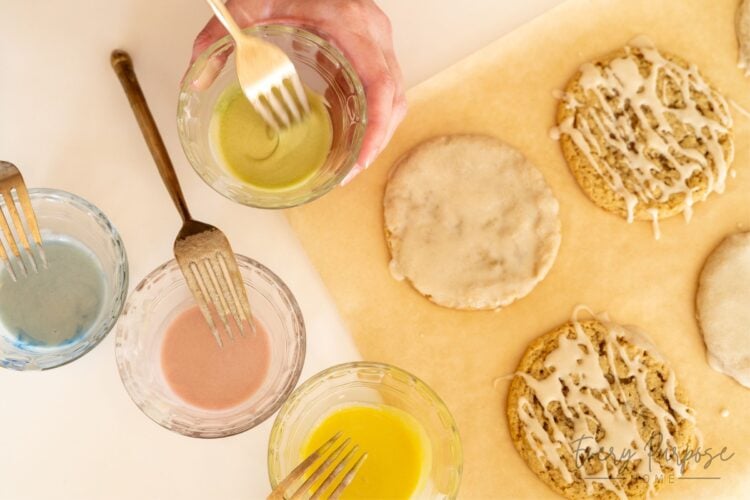
There is something about a perfectly glazed cookie that feels like a celebration, but I’ve always disliked the crunchiness and blandness of royal icing. As a former micro-bakery owner, I wanted a finish that actually enhanced the flavor of my sourdough cookies rather than just sitting on top of them. This Simple Cookie Glaze is exactly that! It’s a soft-set, buttery, and completely dye-free recipe that melts in your mouth and complements cookie flavors beautifully.
So, whether you’re looking for a snowy white Christmas cookie or a botanical pastel for spring, this versatile glaze is designed to stay moist and melt-in-your-mouth tender while giving you the look you’re going for. In this post, I’m sharing my favorite bakery techniques for dipping and drizzling, plus a full Dye-Free Color Guide to help you achieve stunning seasonal colors using only natural ingredients. It’s the perfect no-crunch way to elevate your favorite cookies!
Why Make a Dye-Free Simple Cookie Glaze Instead of Royal Icing
While royal icing is the gold standard for professional cookie decorators who need sharp lines and a rock-hard finish for packaging their cookies, it isn’t always the best choice for when it comes to the flavor and eating experience.
Here is why I prefer this soft-set glaze for my recipes:
- No Sharp or Crunchy Bite: We’ve all bitten into a beautiful sugar cookie only to have the icing shatter like glass or feel unpleasantly crunchy as you chew. This glaze is designed to be the opposite. It sets enough to be handled, but it stays soft, buttery, and melt-in-your-mouth tender.
- Flavor Over Function: Royal icing is mostly just sugar and egg whites (or meringue powder), which can sometimes be a sweet but overall bland flavor. Because this glaze uses melted salted butter and real vanilla, it tastes more like the center of a vanilla truffle, and feels like melted white chocolate in your mouth. It complements the cookie rather than just sitting on top of it.
- Kid-Friendly & Dye-Free: Since this glaze stays soft, it’s much more forgiving for little hands to help with dipping and drizzling. Plus, the creamy base of the butter and milk pairs well with dye-free food colorings (or alternative options above) to look soft and pastel, rather than neon and artificial.
- Complements Sourdough Cookies: Sourdough discard cookies (such as my Soft Sourdough Sugar cookies) can have a complex, slightly tangy depth. A hard, crunchy icing would overwhelm that texture and flavor. Whereas, a soft glaze like this one soaks in just a tiny bit, melding with the cookie to create a cohesive, bakery quality treat.
This Simple Cookie Glaze vs. Royal Icing: If you’re looking for a cookie that looks like art and has vibrant colors and sharp lines, then you’ll need to use a difference recipe for royal icing. But if you want a cookie that people can’t stop eating because the texture is perfectly balanced and soft, this is simple cookie glaze is for you!
Ingredients
- 1½ cups powdered sugar (188g):
- 1 tsp vanilla extract (5g): I always recommend pure vanilla extract. Imitation vanillas often contain synthetic additives that can leave a slightly bitter aftertaste in a simple cookie glaze like this.
- 1½ tbsp salted butter, melted (21g): For a perfectly smooth and glossy finish, ensure your butter is melted but not hot. The butter is what gives this glaze its “truffle-like” richness. Note: If you only have unsalted butter on hand, just add the tiniest extra pinch of salt to the bowl.
- 2-3 tbsp milk (30-46g): Any milk works here! Whole milk provides the creamiest finish, but you can use lower-fat milk or even heavy cream if you want an extra-thick “flooding” glaze.
- Pinch salt: I prefer fine sea salt. It dissolves quickly into the glaze and cuts through the sweetness of the sugar. Avoid iodized table salt if possible, since it can have a metallic flavor that can be detected in a simple recipe like this.
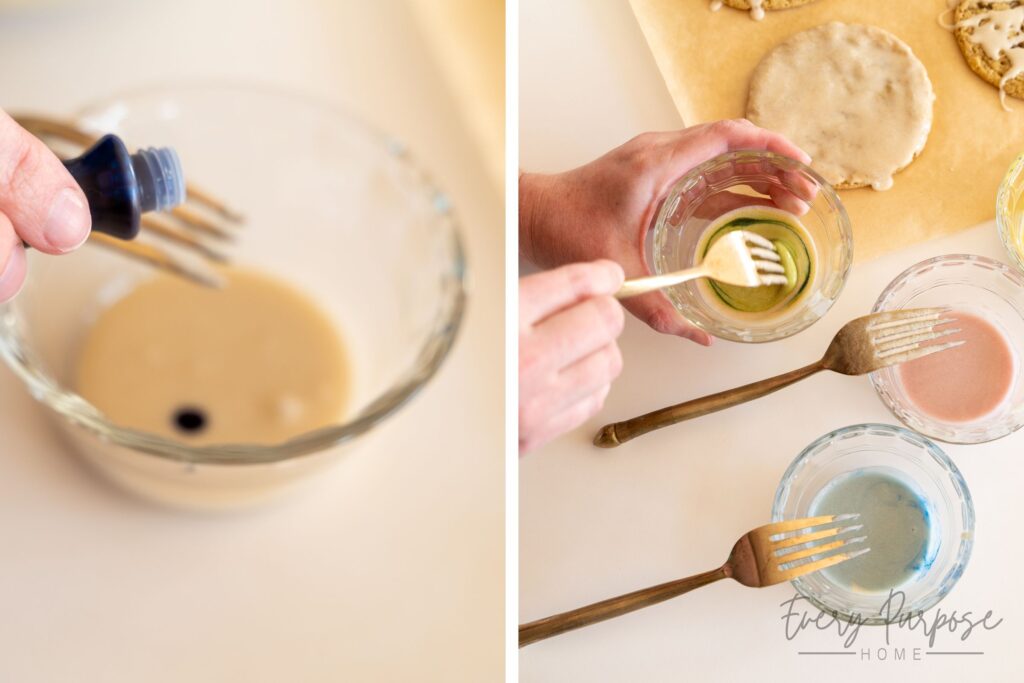
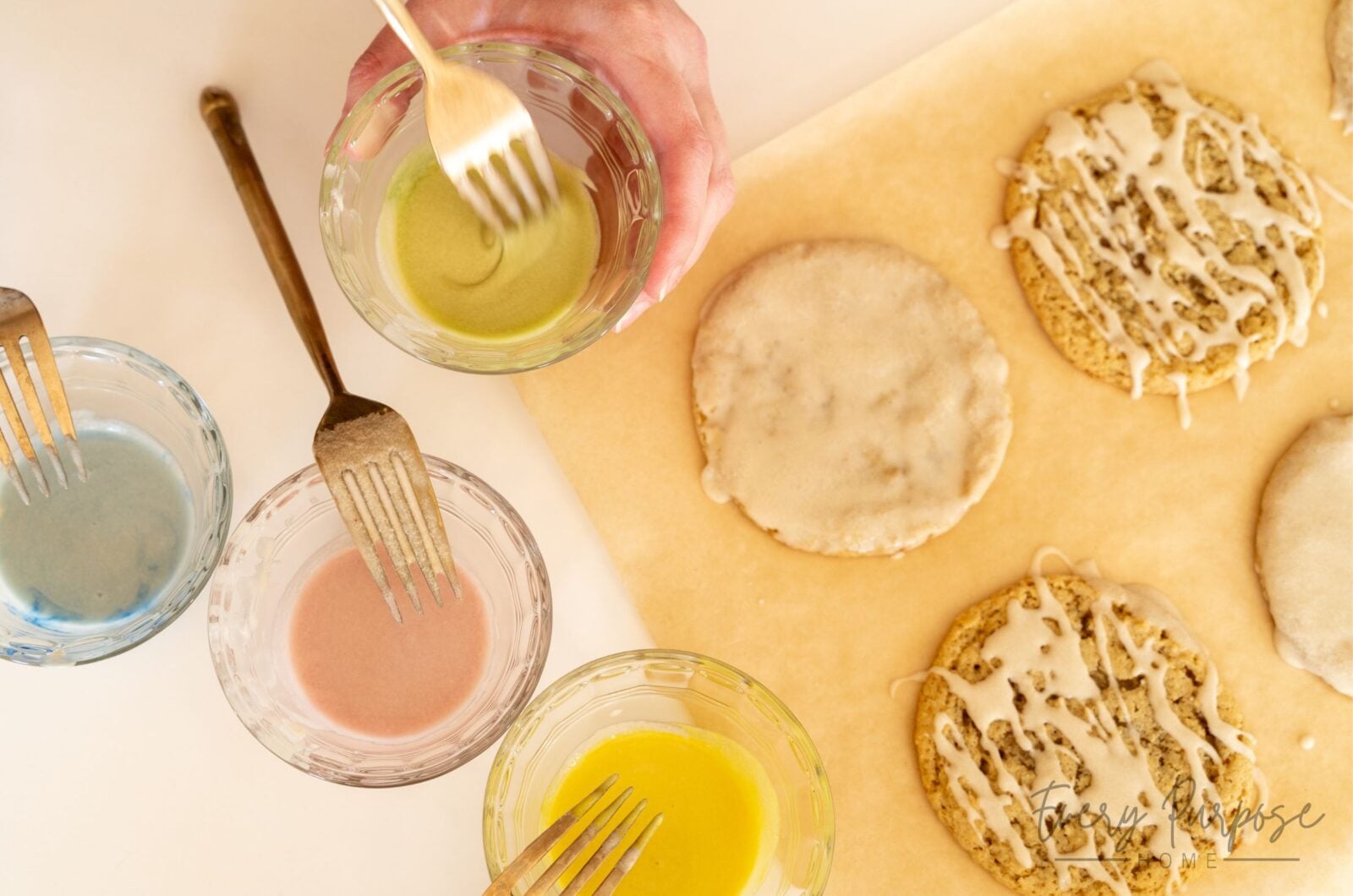
- (Optional) dye-free food coloring: While I love having these dye-free drops for convenience, you can also use natural pantry staples! A tiny drop of beet juice makes a beautiful pink, a pinch of turmeric creates a soft yellow, and a half teaspoon of matcha powder results in a lovely earthy green.
How to Make Dye-Free Simple Cookie Glaze
To Make the Cookie Glaze
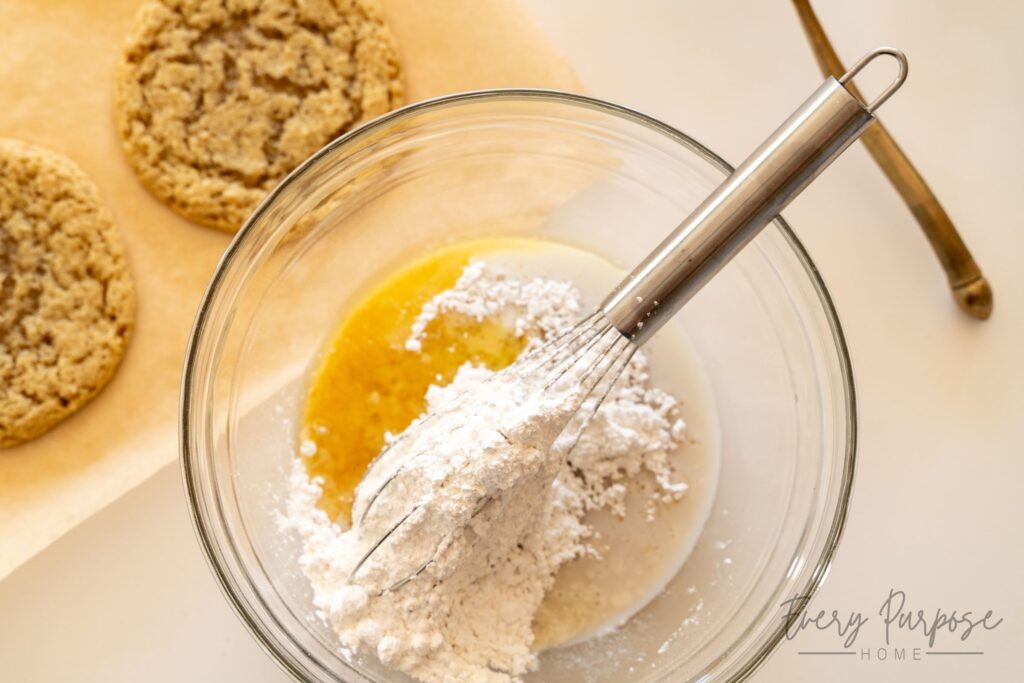
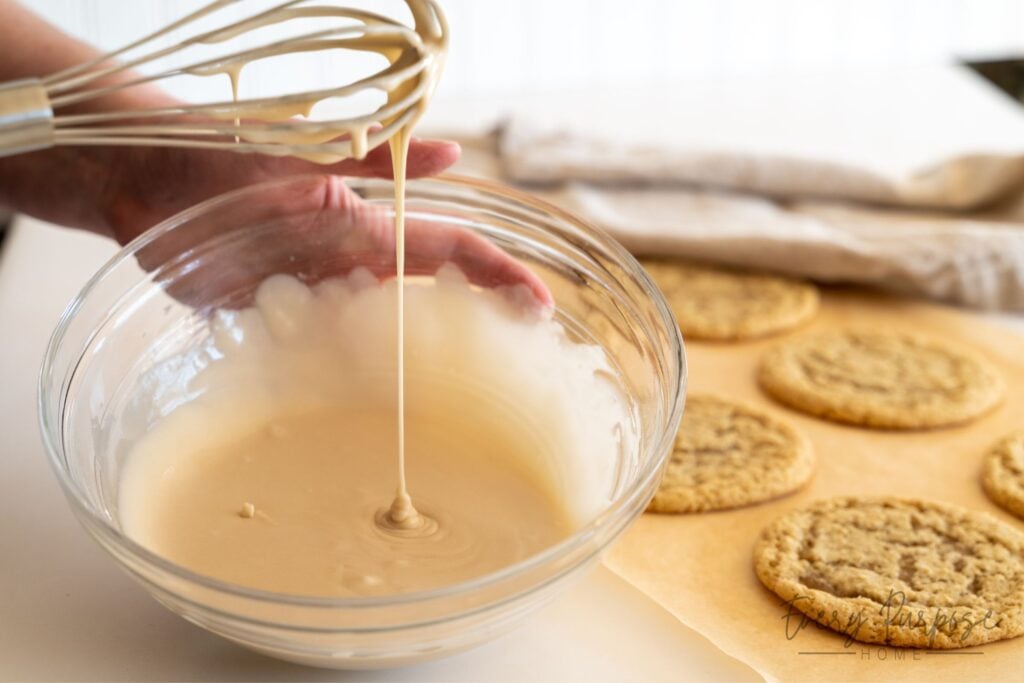
Combine Ingredients: Add the powdered sugar, vanilla extract, melted butter, milk, and salt to a medium bowl. Whisk vigorously until smooth and combined. Note: If the powdered sugar contains large chunks, then sifting it before adding it to the bowl will help prevent a grainy glaze.
To Color (Optional): Add dye-free food coloring (1 drop at a time) until the glaze reaches the desired color. You may use the other options (beet juice, turmeric, or matcha) in this step if desired.
Check the Consistency: If the glaze feels too thick, then add more milk (a teaspoon at a time) until the desired consistency is reached. Or, if it feels too thin, add more powdered sugar (one tablespoon at a time) until it feels thick enough for your liking! Choosing the thickness is dependent on how you plan to apply the cookie glaze (options below).
Use Glaze Immediately: Glaze completely cooled cookies immediately, before the glaze dries. One batch glazes approximately one batch of my sourdough cookies, or 12-14 jumbo cookies.
To Use the Cookie Glaze
To prevent the glaze from melting or breaking, always wait until cookies are completely cooled before glazing.
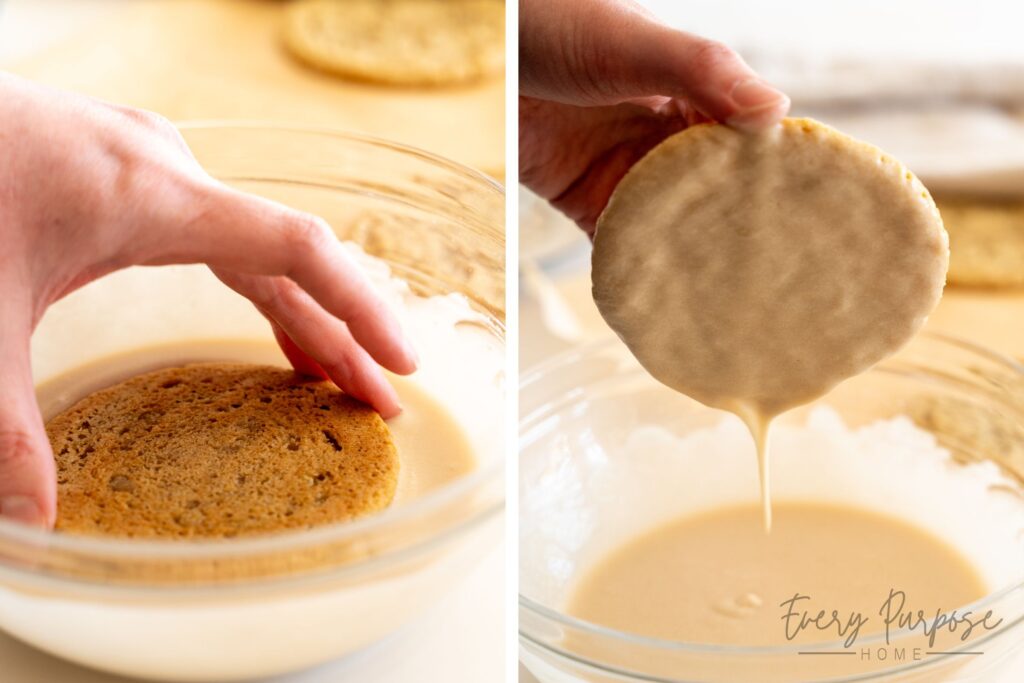
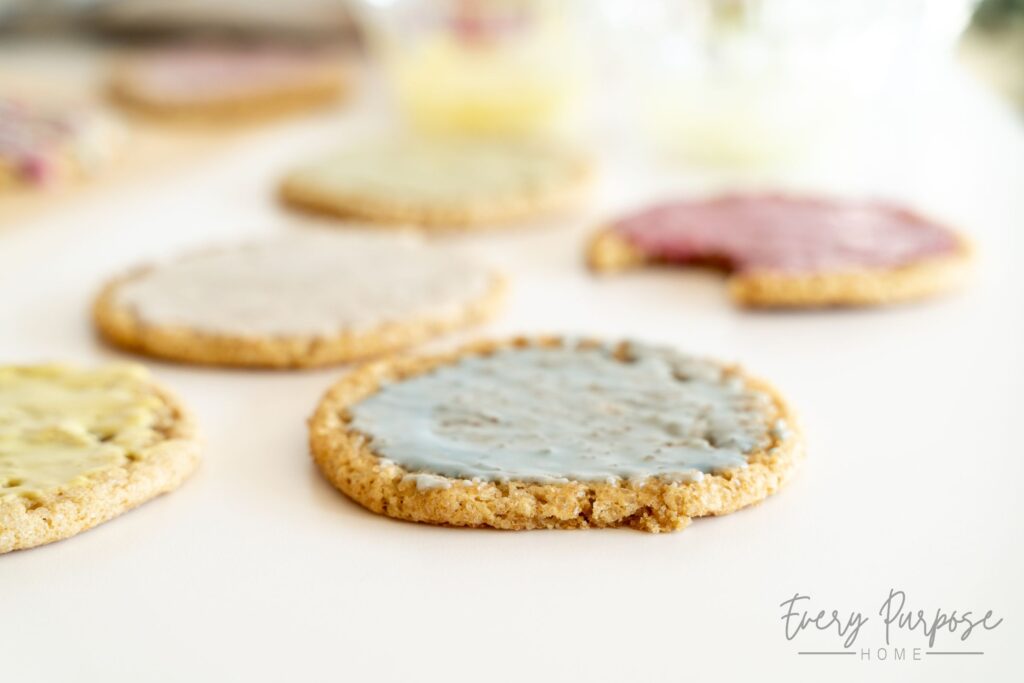
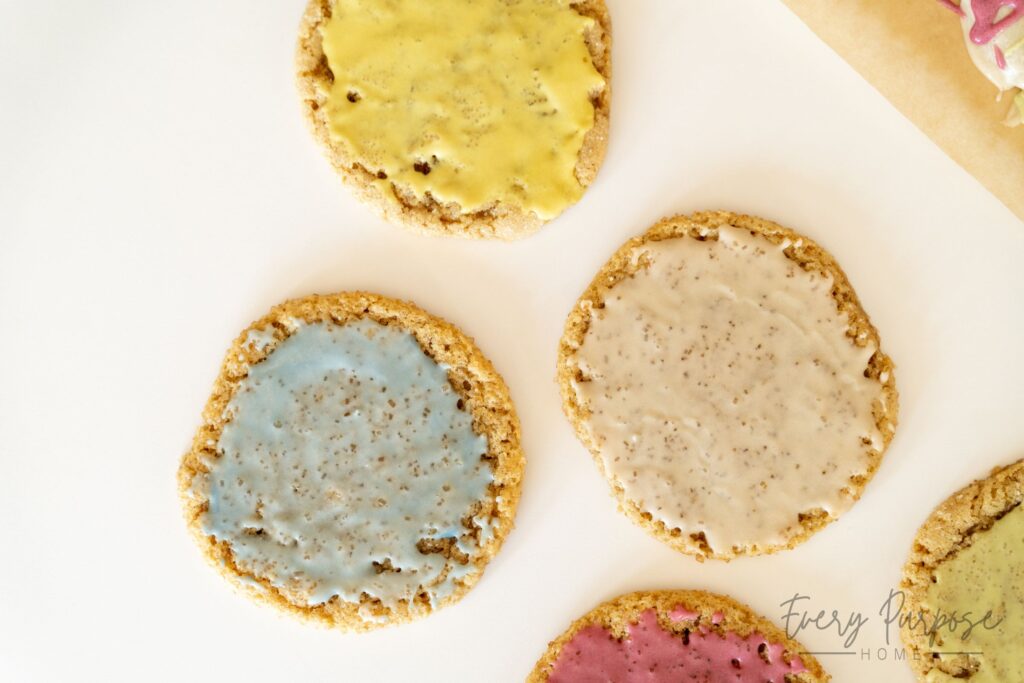
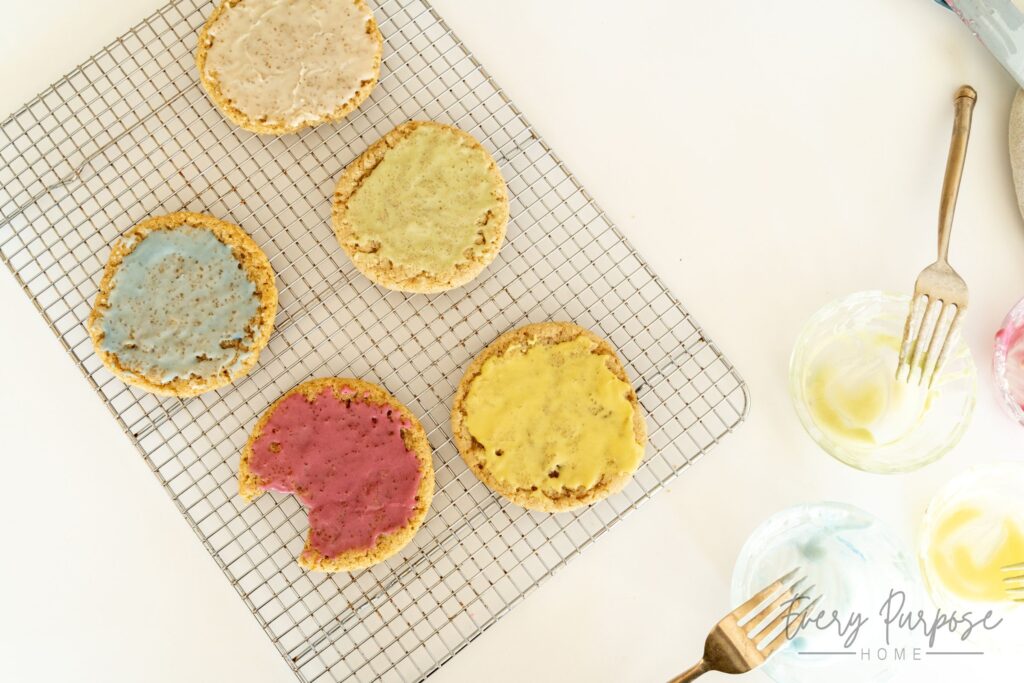
Dip Method: Gently place a cookie face down in the glaze, and swirl it around with your hand to ensure the face gets completely covered. Then, lift it out, flip it over, and place it on a cooling rack (face up) to drip dry. Lean towards thinner consistency.
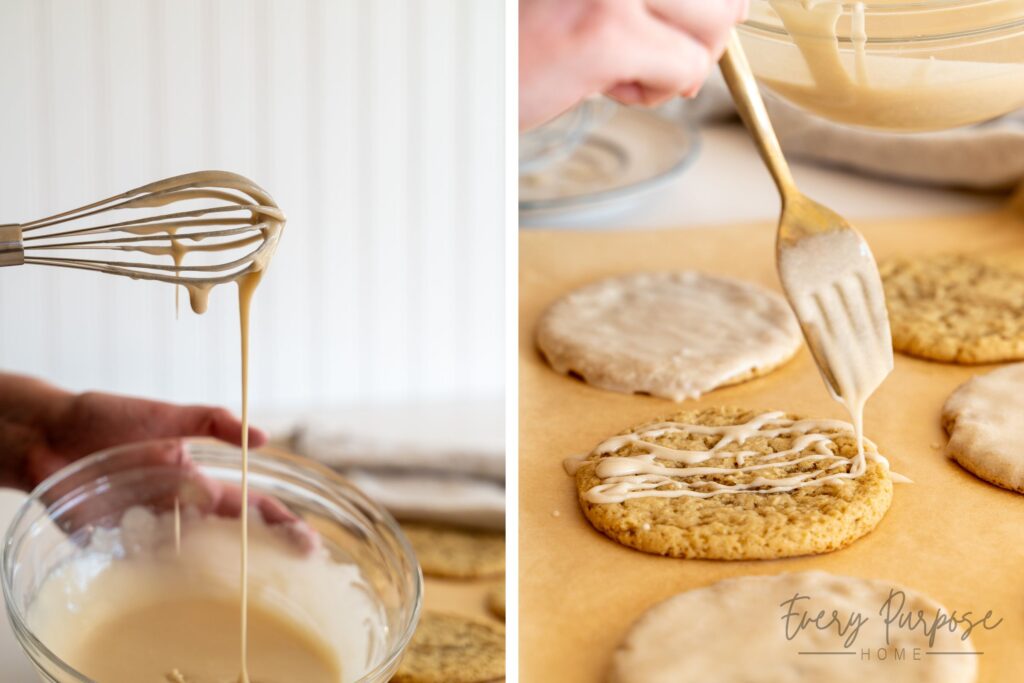
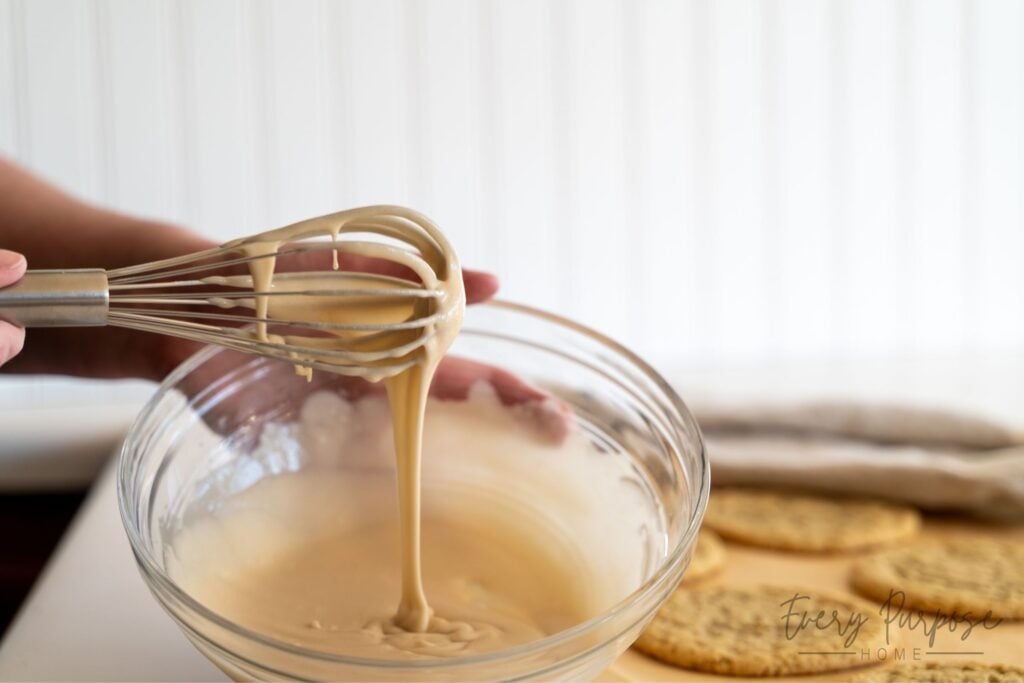
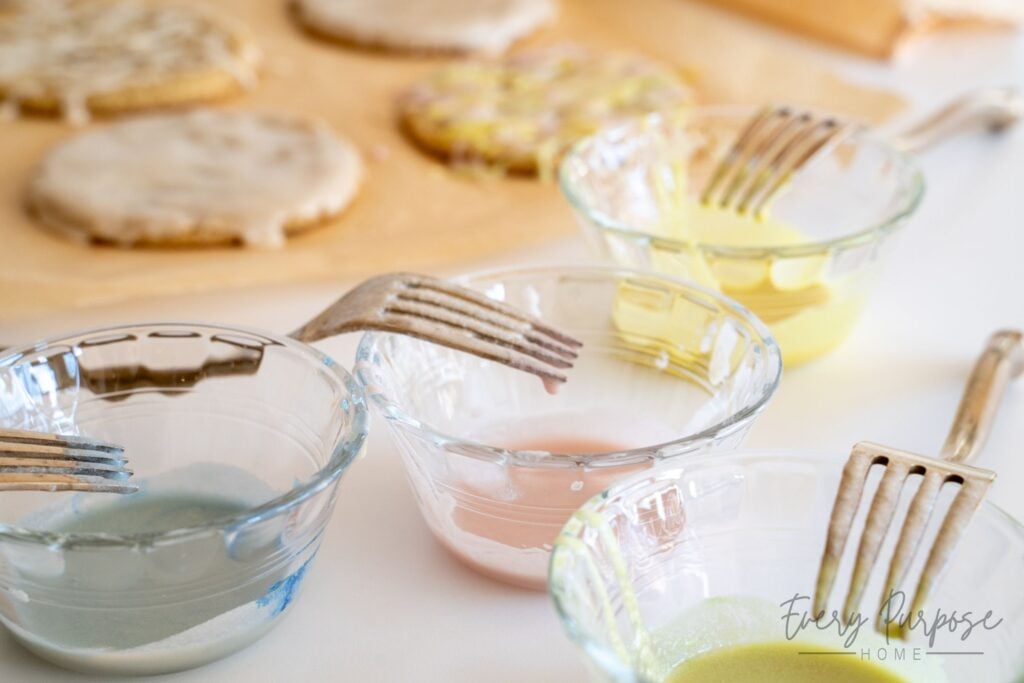
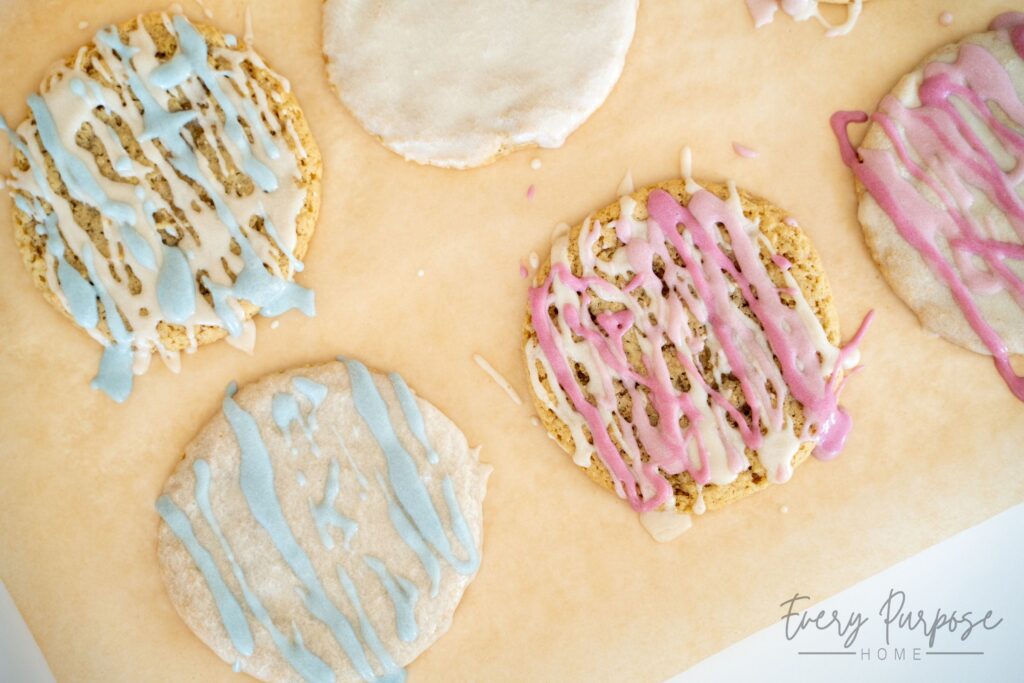
Drizzle Method: Use a fork or a whisk to dip into the glaze and drizzle it generously over the cookies. Lean towards thicker consistency.
Piping Method: If the glaze seems too thin to pipe, add 1 tbsp powdered sugar to thicken it. Transfer it to a piping bag (or plastic food bag with the tip cut off) and pipe it onto cooled cookies. Note: This is a soft-set glaze designed to remain soft and moist at room temperature (no sharp or crunchy icing here!). However, this means that piping is more for creating borders or flooding, rather than piping fine details.
Storage & Tips
Storage: Because this glaze dries and sets up (even though it’s a soft-set), the glaze cannot be made in advance and must be made immediately before use. Glaze on cookies is safe in the fridge, or at room temperature for up to 5 days.
For Best Results: For the best texture, glaze your cookies the day you plan to serve them. While they stay delicious for days, this soft-set glaze will draw moisture from the cookies, which can lead to a softer or crumblier cookie over time!
If Glaze Sets Too Early: If the glaze begins to dry or develop a crust before you’re finished, simply whisk vigorously to break up the icing again. Or if it’s really set, heat very slowly over a double boiler (or in the microwave at 50% power for 5 seconds at a time) and whisk until smooth, adding ½ tsp extra milk if necessary.
Frequently Asked Questions
Does this glaze dry hard enough for stacking?
Because this recipe uses butter and milk, it is a soft-set glaze, and not a hard royal icing. While the surface will “set” and become dry to the touch after a few hours, the glaze remains soft underneath. I don’t recommend stacking these cookies if you want your designs to remain completely intact, but if you must, place a piece of parchment paper between layers and keep them in a single layer as much as possible to minimize smearing, though some smearing is most likely to happen.
What are the best dye-free ways to color this glaze?
If you don’t have dye-free food coloring, you can use natural pantry staples! A tiny drop of beet juice makes a beautiful pink, a pinch of turmeric creates a soft yellow, and a half teaspoon of matcha powder results in a lovely earthy green. Just remember that adding liquids or powders can change the final consistency, so add them before you do your final consistency check.
Can I make this glaze dairy free?
Absolutely. You can easily swap the salted butter for a vegan butter stick and the milk for any plant-based milk (oat milk and almond milk work beautifully). Since some plant milks are thinner than dairy milk, just add it a half tablespoon at a time to ensure you don’t make the glaze too runny.
Why did my glaze turn out grainy?
Grainy glaze usually happens if the powdered sugar had large chunks (needed sifting), or if the melted butter was too hot when it was added to the sugar. For the smoothest finish, let your melted butter cool for a minute or two before whisking it into the sugar, and always sift your powdered sugar if you notice large clumps in the bag.
Is this the best cookie glaze for sourdough discard cookies?
Yes! In fact, I designed this specifically to pair well with my sourdough cookies (especially my Soft Sourdough Sugar Cookies recipe!). The slight tang of a sourdough cookie complements the sweet, buttery flavor of this simple dye-free cookie glaze. Pro Tip: Because sourdough cookies are naturally moisture-rich, you will get the best results if you glaze them the day you plan to eat them.
Dye-Free Holiday Color Guide
Here’s a list of dye-free colors to make for different holidays and occasions! These pair well with my Soft Sourdough Sugar Cookies recipe! Please note that with natural dyes, the final colors will be pastel rather than neon!
Baby Shower
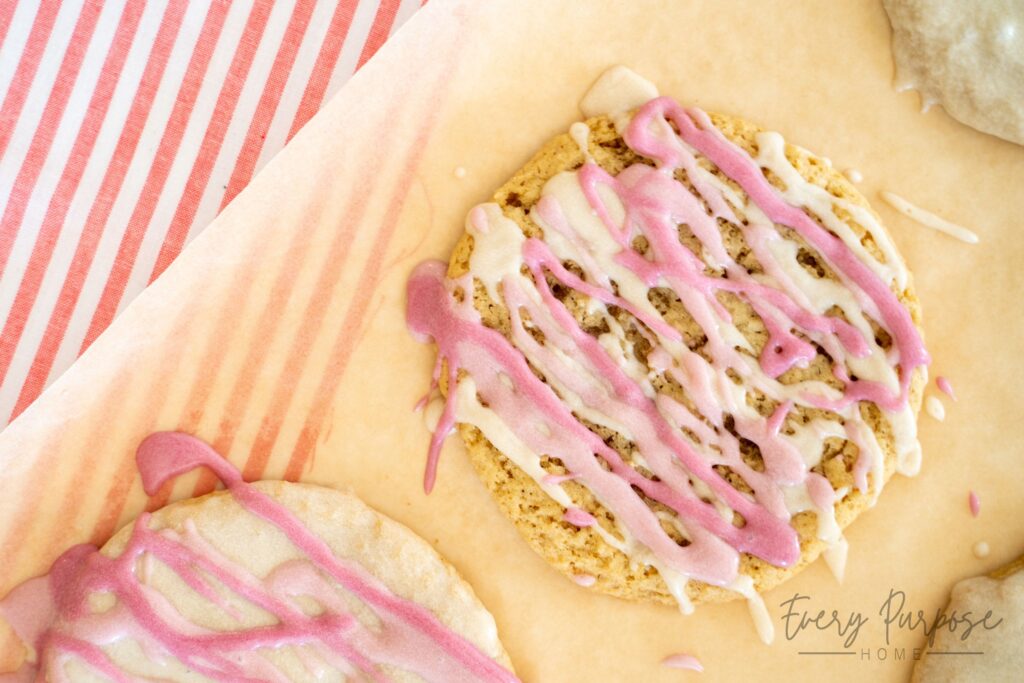
- Pink (Various Shades): Use dye free red food coloring (one drop at a time) to make different shades of pink glaze. Or, add freeze-dried strawberry powder 1 tsp at a time. Unlike beet juice, the powder won’t thin your glaze, and it adds a subtle “strawberries and cream” flavor to your cookies.
- Blue: Use blue dye-free food coloring (1 drop at a time) to make blue glaze. Or, try a butterfly pea flower powder for a natural cornflower blue.
- White: Original glaze recipe (undyed)
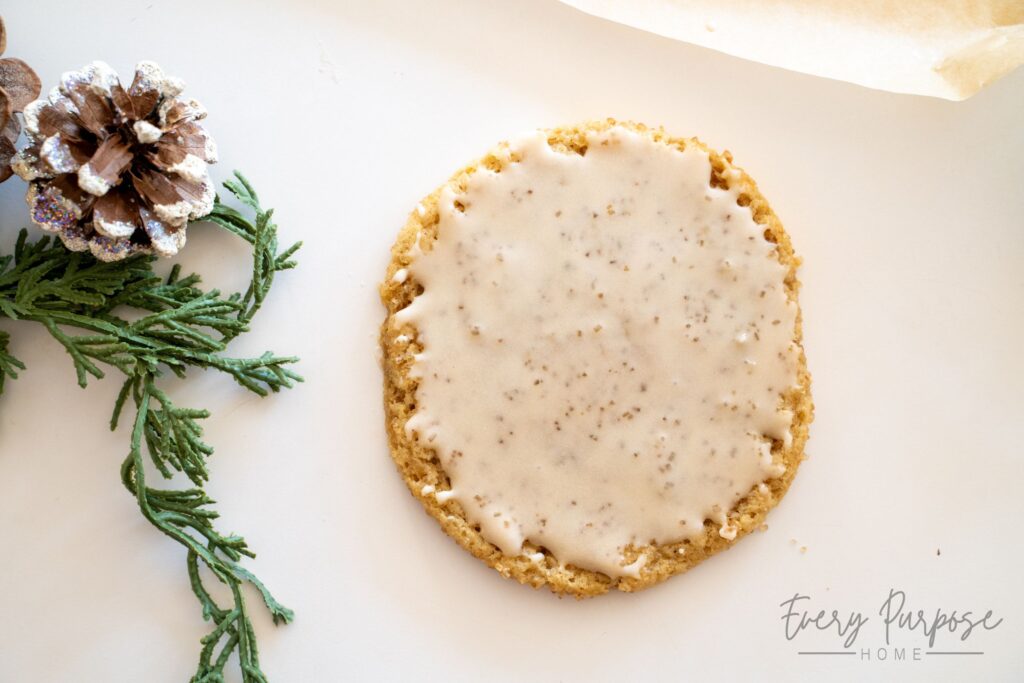
Christmas Day
- White: Original glaze recipe (undyed). Then, sprinkle lightly with crunchy granulated sugar. This looks like a sparkly snow covered cookie.
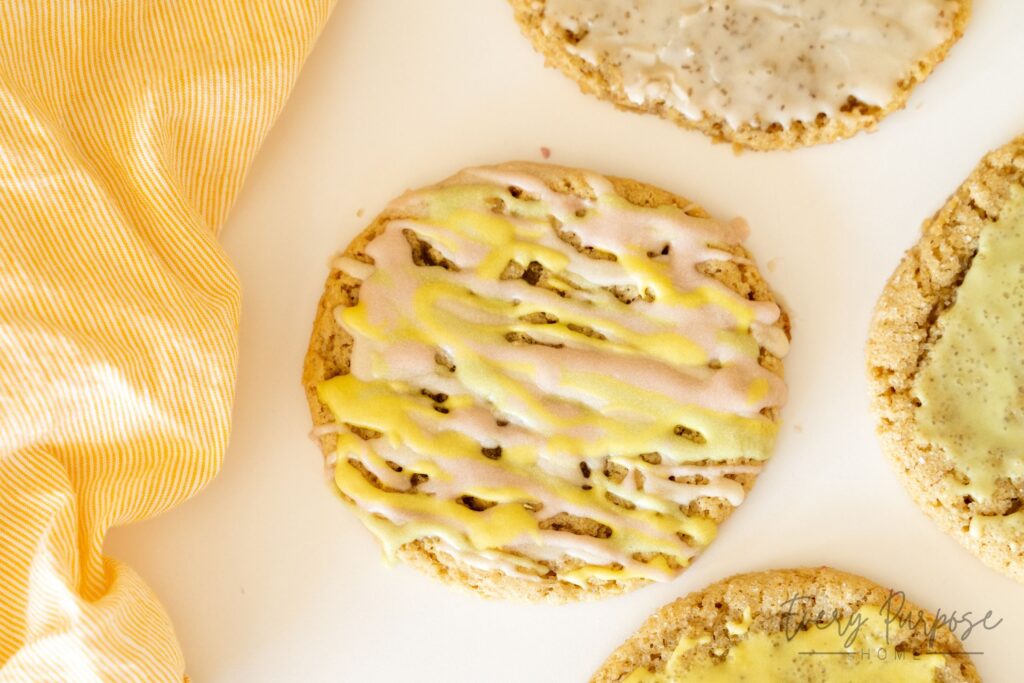
Easter & Spring
- Pink (Various Shades): Use dye free red food coloring (one drop at a time) to make different shades of pink glaze. Or, add freeze-dried strawberry powder 1 tsp at a time. Unlike beet juice, the powder won’t thin your glaze, and it adds a subtle “strawberries and cream” flavor to your cookies.
- Yellow: Use yellow dye-free food coloring 1 drop at a time. Or, add a tiny smidge of turmeric. Be careful, a little goes a long way!
- Green: Use green dye-free food coloring 1 drop at at a time. Or add a bit of matcha powder for a warm, earthy green.
- White: Original glaze recipe (undyed)
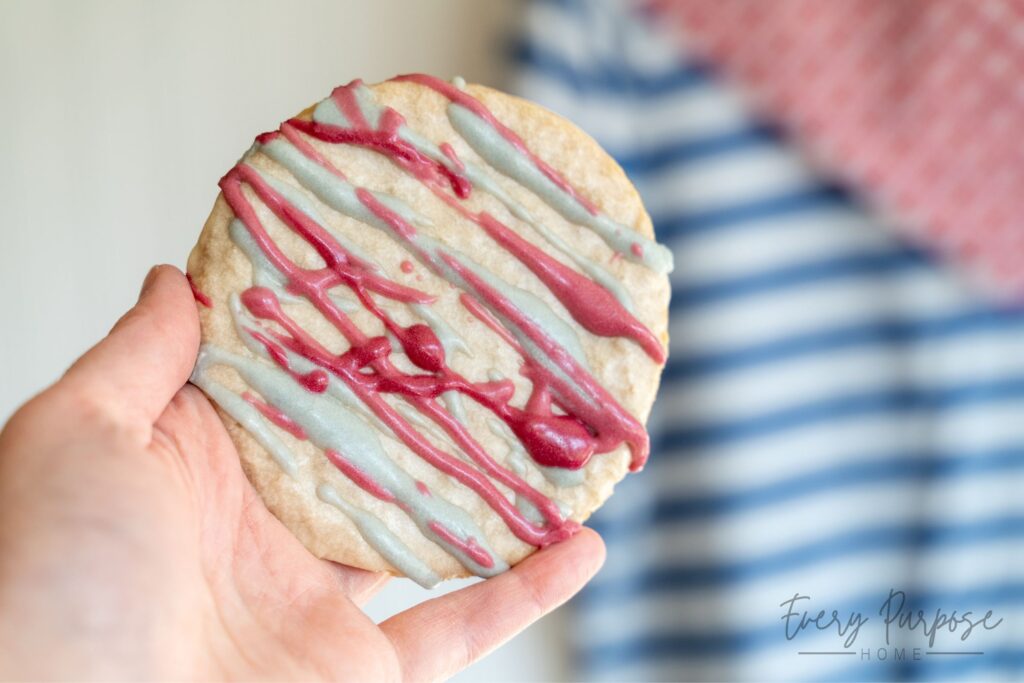
Independence Day
- Red: Red dye free food coloring usually looks like hot pink or purple. Try using pomegranate juice or a concentrated beet powder for something a bit closer to red.
- White: Original glaze recipe (undyed)
- Blue: Use blue dye-free food coloring (1 drop at a time) to make blue glaze. Or, try a butterfly pea flower powder for a natural cornflower blue.
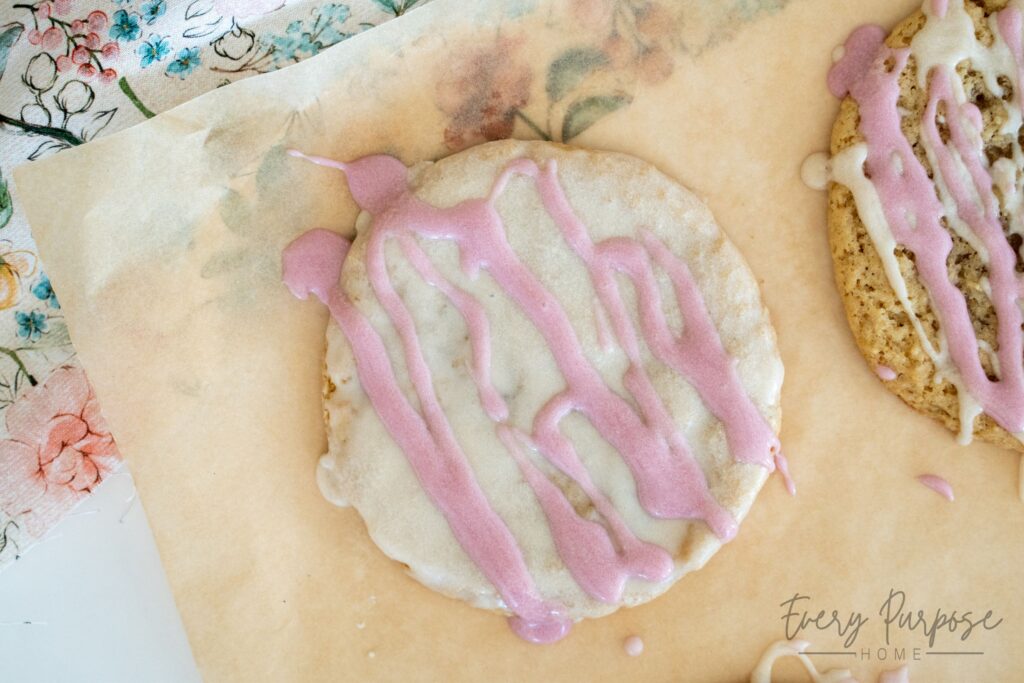
Mother’s Day
- Pink (Various Shades): Use dye free red food coloring (one drop at a time) to make different shades of pink glaze. Or, add freeze-dried strawberry powder 1 tsp at a time. Unlike beet juice, the powder won’t thin your glaze, and it adds a subtle “strawberries and cream” flavor to your cookies.
- White: Original glaze recipe (undyed)
Valentine’s Day
- Pink (Various Shades): Use dye free red food coloring (one drop at a time) to make different shades of pink glaze. Or, add freeze-dried strawberry powder 1 tsp at a time. Unlike beet juice, the powder won’t thin your glaze, and it adds a subtle “strawberries and cream” flavor to your cookies.
- White: Original glaze recipe (undyed)
Love this recipe? Pin it to your cookie board and follow The Sourdough Cookie Lady on Pinterest for more!
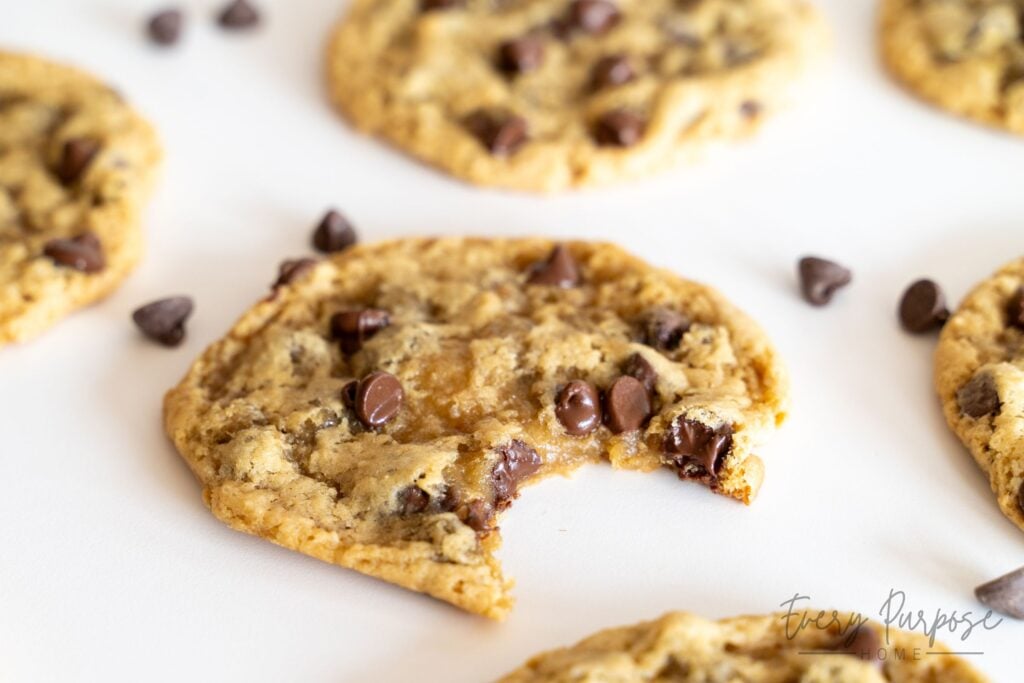
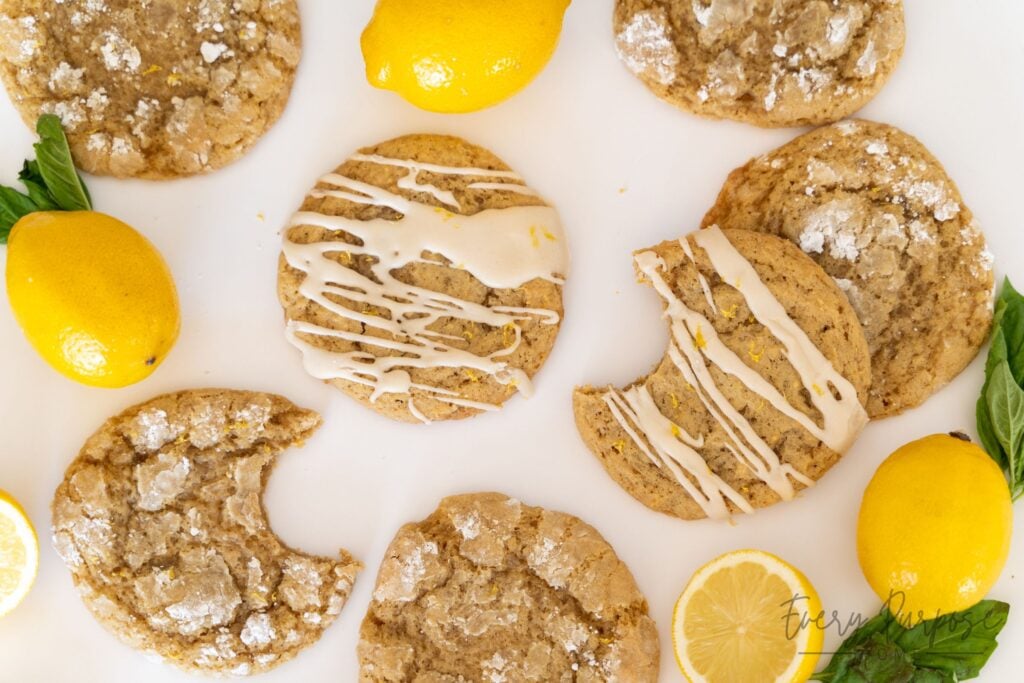
More From The Sourdough Cookie Lady

Simple Cookie Glaze Recipe (Soft-Set & Dye-Free!):
Simple Cookie Glaze (Dye-Free!)
The ultimate soft-set cookie glaze for those who dislike crunchy icing! This buttery, dye-free recipe is designed specifically to complement the tangy depth of sourdough cookies, though it could be used on any of your favorite cookie recipes. It’s easy to customize for any holiday using natural dyes and provides a smooth, melt-in-your-mouth texture that looks as good as it tastes.
14
cookies5
minutes65
kcalKeeps your screen on while viewing recipe
Ingredients
1½ cups powdered sugar (188g)
1 tsp vanilla extract (5g)
1½ tbsp salted butter melted (21g)
2-3 tbsp milk (30-46g)
(Optional) dye-free food coloring (See notes for whole-food alternatives. For holiday-specific cookies like Spring, Valentine’s Day, baby shower, etc, follow my Dye-Free Holiday Color Guide above!)
(Optional) Pairs beautifully with my Soft Sourdough Sugar Cookies recipe!
Directions
- Combine: Add powdered sugar, vanilla extract, melted butter, milk, and salt to a medium bowl. Whisk thoroughly until smooth and combined. Note: Sift powdered sugar before adding to the bowl if you notice large chunks in the bag.
- To Color (Optional): Add dye-free food coloring or alternative (1 drop at a time) until it reaches the desired color.
- Check Consistency: If the glaze feels too thick, add more milk (1 tsp at a time) until it reaches the desired consistency. If it feels too thin, add more powdered sugar (1 tbsp at a time).
- Use Immediately: Glaze completely cooled cookies immediately (see glazing options in notes below). Glaze will set as it dries. See notes below if glaze begins to set too early.
Makes enough to glaze approximately one batch of any of my sourdough cookies, or 12-14 jumbo cookies.
Recipe Notes
- • For Holiday Color Options: See the full Dye-Free Holiday Color Guide located just above this recipe card.
• If Glaze Sets Too Early: If the glaze begins to dry or develop a crust before you’re finished, whisk vigorously to break up the icing. If it has really set, heat very slowly over a double boiler (or in the microwave at 50% power for 5 seconds at a time) and whisk until smooth, adding ½ tsp extra milk if necessary.
• To Store: Glaze cannot be made in advance and must be made immediately before use. Glaze on cookies are safe at room temperature for up to 5 days.
• For Best Results: Glaze your cookies the day you plan to serve them. While glazed cookies stay delicious for days, this soft-set glaze will draw moisture from the cookies, which leads to a crumblier cookie over time.
• For Other Dye-Free Coloring Options: If you don’t have dye-free drops, use a tiny drop of beet juice or freeze-dried strawberry powder for pink, a small pinch of turmeric for yellow, a half tsp matcha powder for green, or a bit of butterfly pea flower powder for a soft blue. Add these before your final consistency check! - Choose Glazing Method:
• Dip: Gently place a cookie face down in the glaze, and swirl it with your hand to ensure the face is covered. Then, lift it out and place it on a cooling rack (face up) to drip dry.
• Drizzle: Use a fork or a whisk to dip into the glaze and drizzle generously over cookies. Allow glaze to set.
• Piping: If glaze seems too thin to pipe, add 1 tbsp powdered sugar to thicken it. Transfer to a piping bag (or plastic food bag with the tip cut off) and pipe onto cookies. Note: This glaze is designed to remain soft at room temperature (no sharp or crunchy icing here!). However, this means that piping is more for creating borders or flooding, rather than piping fine details.
Approximate Nutrition Facts
- Total number of serves: 14
- Calories: 65kcal
- Fat: 1g
- Saturated Fat: 1g
- Sodium: 20mg
- Carbohydrates: 14g
- Sugar: 13g
Like this recipe?
Follow @everypurposehome on Pinterest for more!

)