
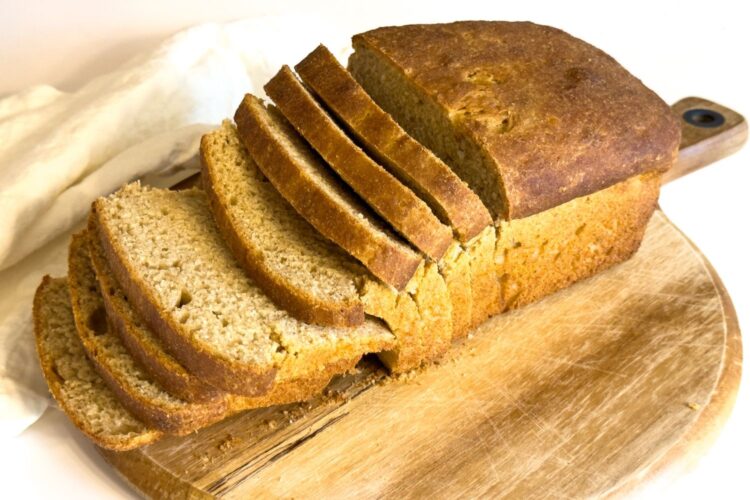
Baking with ancient grains can be tricky, especially since they tend to have a lower gluten content than modern wheat. This means there is definitely a learning curve when switching to ancient grains such as einkorn. But, this einkorn sourdough bread is a no-fail recipe, and only takes a few minutes of hands-on time to make!
Supplies
- Measuring cups and spoons: I use these measuring cups and these measuring spoons.
- Bowls: I use my glass bowl set.
- Spatula: I use a silicone spatula.
- Bread Pan: I use a glass bread pan.
- Cooling Rack: I use a cooling rack to prevent the bread from getting soggy while cooling.
Ingredients
- 1 1/4 cups water
- 1/2 cup sourdough starter (I have used active or sometimes even discard)
- 1 tsp. salt
- 3 tbsp. sweetener of choice (I like 2 tbsp. honey and 1 tbsp. granulated sugar)
- 1 1/2 cup einkorn all-purpose flour (or other all-purpose flour)
- 1 3/4 cup einkorn whole wheat flour (or fresh-milled einkorn flour)
- 1/4 cup softened butter
- 1 tbsp. melted butter for brushing on top
Directions for Einkorn Sourdough Bread
In a large bowl, stir together the water, sourdough starter, salt, and sweetener of choice. Add in the flour, and stir until combined. It will be a pretty wet dough.
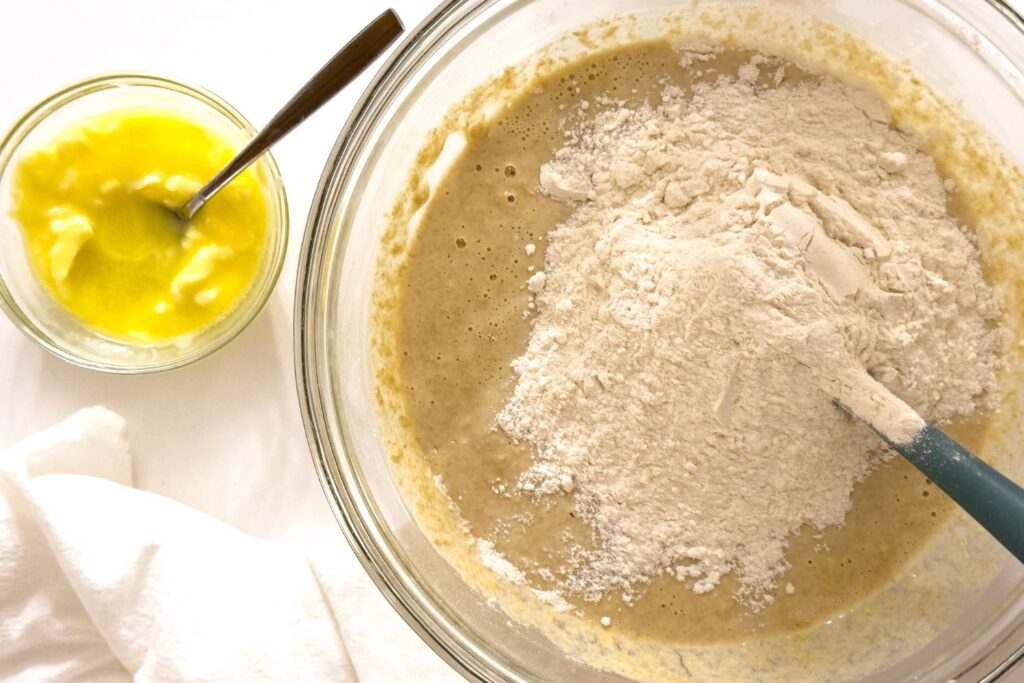
Add in the softened butter, and use your hands to incorporate it. Tip: When working with a wet dough like this, be sure to wet your hands beforehand to keep the dough from sticking to your hands.
Cover, and allow to rest for about an hour.
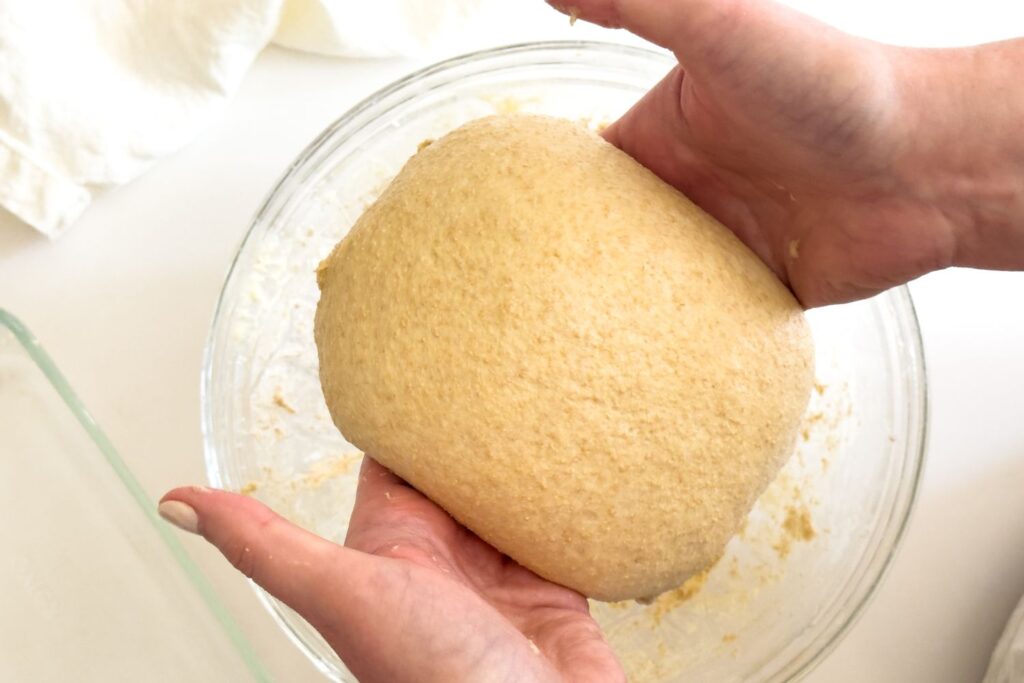
Perform some stretch-and-folds. To do this with such a hydrated dough, it’s easiest to grab the right and left side of the dough, lift it completely in the air, and then set it back down. Rotate the bowl and repeat several times.
Cover, and allow to sit 8-12 hours, or overnight.
Preheat the oven to 375 degrees F, and thoroughly butter a bread pan to prevent sticking.
Wet hands, and perform similar stretch-and-folds as before to create tension in the dough. Removing all of the built up air bubbles will prevent large gaping holes in your bread once baked.
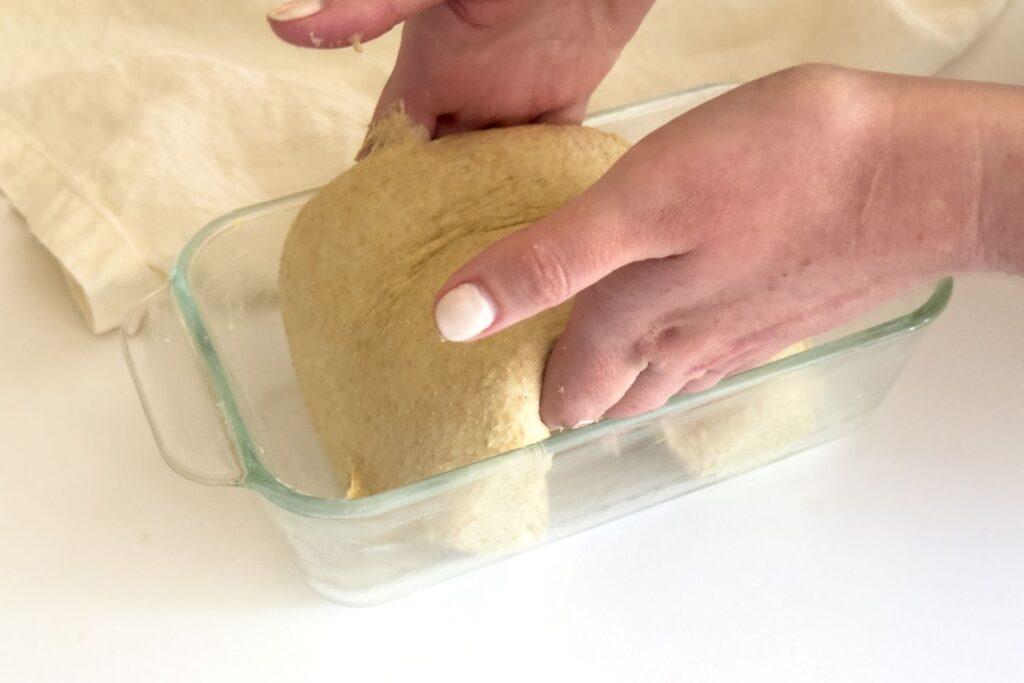
Transfer to the buttered bread pan, seam side down.
For the fluffiest bread, do an optional 1-2 hour rise here.
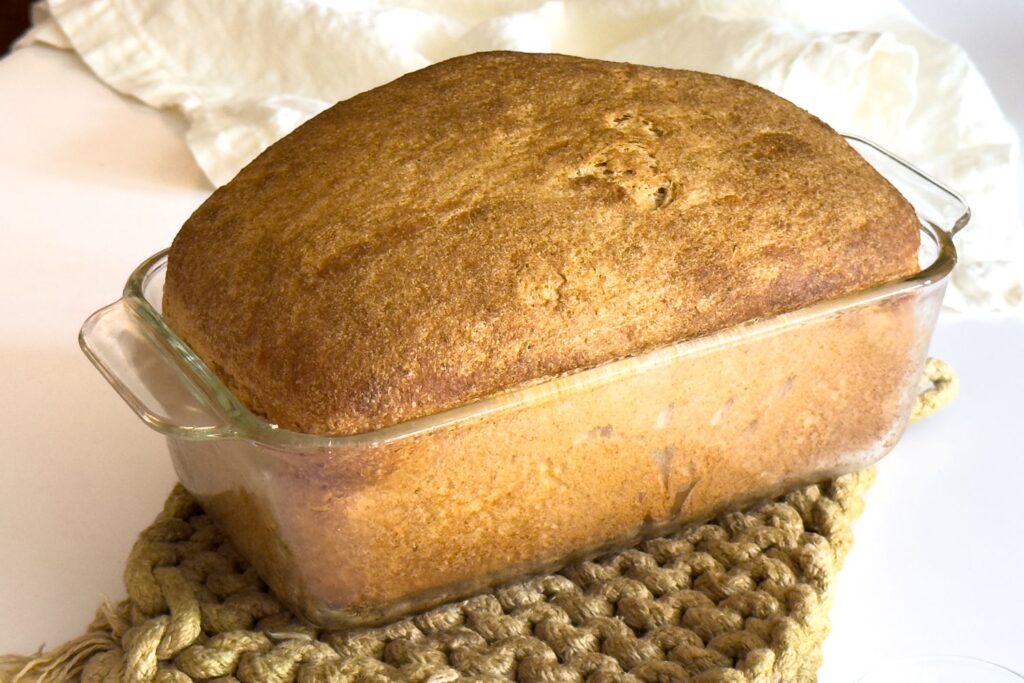
Brush the top with half of the melted tbsp. butter, and bake in preheated oven for 50-60 minutes, or until cooked through (200 degrees F internal) and golden brown, rotating halfway through baking.
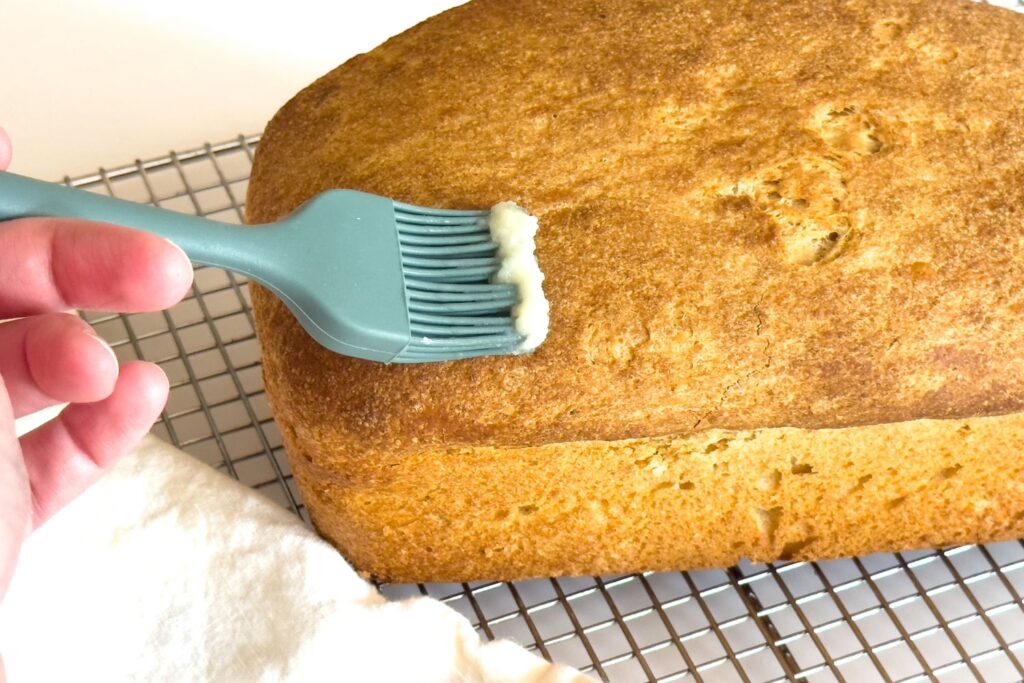
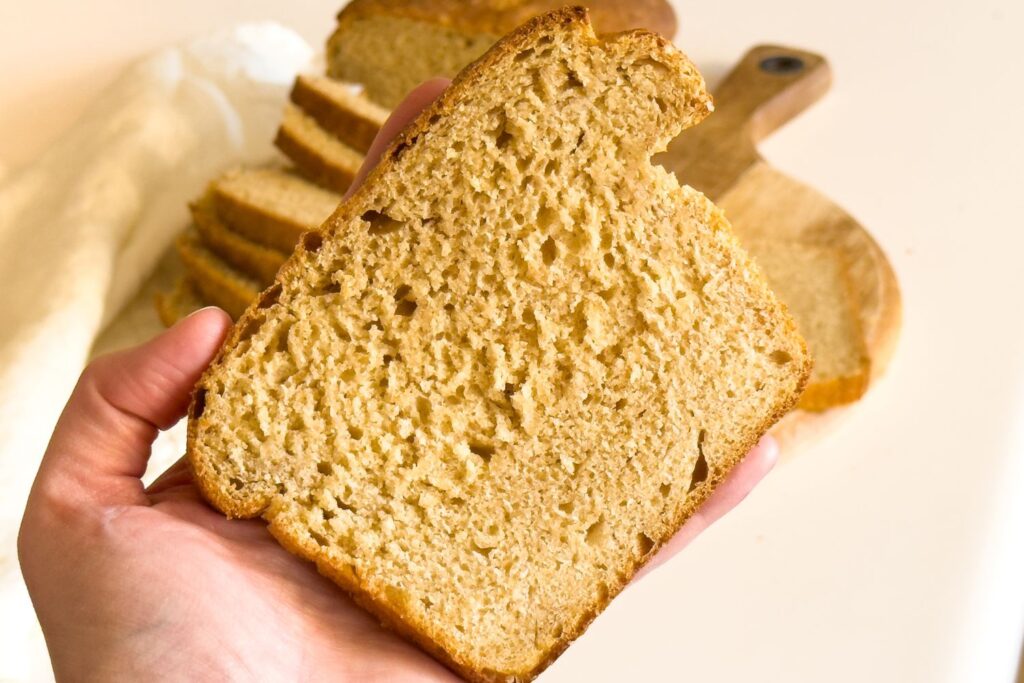
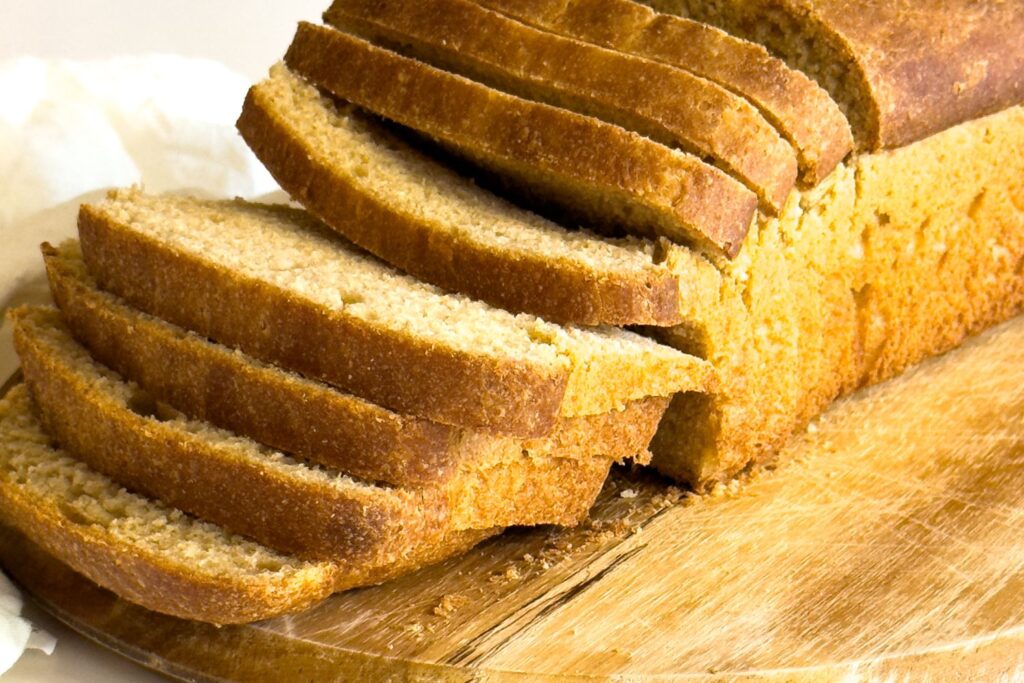
Transfer to a cooling rack, and brush on remaining melted butter. Once completely cool, cut into 16 equal slices. (Best bread knife here!)
Substitutions
- For an all-whole-wheat recipe (or all fresh-milled), use a total of 3 cups of flour in place of all flour that the recipe calls for.
- You can substitute any oil for the butter if desired at a 1:1 ratio.
- You can use any sweetener of choice, including maple syrup. Or, you may skip the sweetener completely.
Does einkorn sourdough bread freeze well?
Yes! If you thoroughly wrap it to prevent freezer-burn, this bread will freeze well for up to several months. Simply remove from freezer and let sit at room temperature for a few hours to thaw.
Can I use other types of flour?
Absolutely! You can use all-purpose flour, whole wheat flour, ancient grains, and more. For all-purpose flours, you may need to use a bit more flour than the recipe calls for. To make it all whole-wheat, you may need to use a bit less. Just try it and feel the dough! It will be a sloppy mess at first, but it eventually comes together into a beautiful (but still very hydrated) dough.
Can I use all fresh-milled flour?
Yes, you can absolutely use all fresh-milled flour! You may need to experiment slightly with the flour ratios. I recommend starting with 3 cups of milled flour, and then increasing from there if needed.
Remember that fresh-milled flour takes longer to absorb the water, so you want to leave the dough a bit wetter than you may initially think.
What is einkorn?
Einkorn wheat is an ancient grain that has not been changed, hybridized, or modernized. This means that its flavor, and most importantly its health benefits, remain uncompromised the way that God made it to be. It’s different than modern wheat, but that is a beautiful thing. There is just a learning curve at first when all you’ve ever baked with is modern wheat! It’s worth the hassle to learn though, because the flavor and health benefits are unmatched.
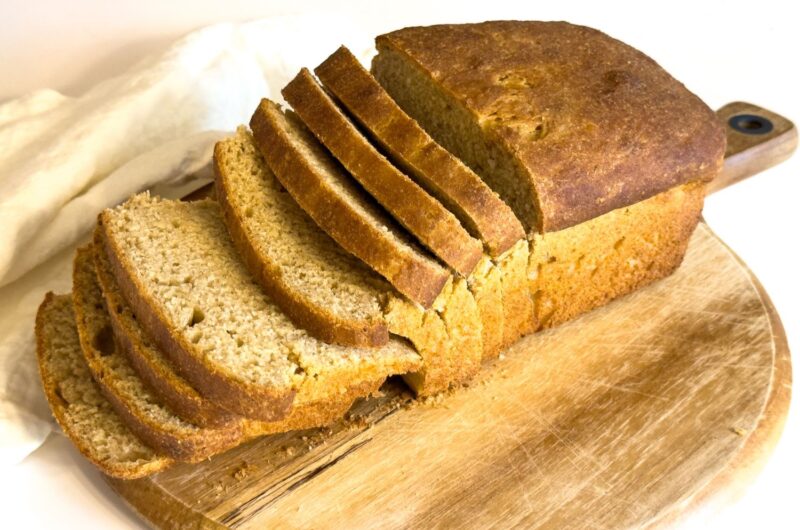
Einkorn Sourdough Bread (and Fresh-Milled Flour Option)
This einkorn sourdough bread combines the flavor and health benefits of ancient einkorn wheat with traditional fermented sourdough, all while not compromising the texture and softness you want from your breads!
16
15
minutesmin55
minutesmin140
kcalKeeps your screen on while viewing recipe
Ingredients
- Supplies
– Measuring cups and measuring spoons
– Bowl
– Spatula
– Bread pan
– Cooling rack
– Best bread knife here!- Ingredients
1 1/4 cups water
1/2 cup sourdough starter (I have used active or sometimes even discard)
1 tsp. salt
3 tbsp. sweetener of choice (I like 2 tbsp. honey and 1 tbsp. granulated sugar)
1 1/2 cup einkorn all-purpose flour (or other all-purpose flour)
1 3/4 cup einkorn whole wheat flour (or fresh-milled einkorn flour)
1/4 cup softened butter
1 tbsp. melted butter for brushing on top
Directions
- Make the Dough
- In a large bowl, stir together the water, sourdough starter, salt, and sweetener of choice. Add in the flour, and stir until combined. It will be a pretty wet dough.
- Add in the softened butter, and use your hands to incorporate it. Tip: When working with a wet dough like this, be sure to wet your hands beforehand to keep the dough from sticking to your hands.
- Cover, and allow to rest for about an hour.
- Perform some stretch-and-folds. To do this with such a hydrated dough, it’s easiest to grab the right and left side of the dough, lift it completely in the air, and then set it back down. Rotate the bowl and repeat several times.
- Cover, and allow to sit 8-12 hours, or overnight.
- Final Shape and Bake
- Preheat the oven to 375 degrees F, and thoroughly butter a bread pan to prevent sticking.
- Wet hands, and perform similar stretch-and-folds as before to create tension in the dough. Removing all of the built up air bubbles will prevent large gaping holes in your bread once baked.
- Transfer to the buttered bread pan, seam side down.
- For the fluffiest bread, do an optional 1-2 hour final rise here.
- Brush the top with half of the melted butter, and bake in preheated oven for 50-60 minutes, or until cooked through (200 degrees F internal) and golden brown, rotating halfway through baking.
- Transfer to a cooling rack, and brush on remaining melted butter. Once completely cool, cut into 16 equal slices. (Best bread knife here!)
Recipe Notes
- Approximate Nutritional Information Per Serving (1 Slice): 140 calories, 3g protein, 4g fats, 23g carbs, 3g sugars, 175mg sodium
- For tips on making it with all white flour, all wheat flour, or all fresh-milled flour, see the FAQ’s above.
from my baking sheet to yours,




What adjustments would I need to make if I used all whole grain einkorn flour instead of the AP flour? I’m guessing I would need to add more water but how much?
Hey there, Grace!
I got behind on messages, but I’m catching up now! You’re correct, whole grain flours do absorb more water than all purpose flours do! If you’d like to sub the AP flour for all freshly milled flour, you can do a 1:1 swap, and add anywhere from a 1/2 tbsp to 2 tbsp of additional water to the recipe! Though if I’m being honest, I’ve done an even swap without adding extra water at all to some recipes, and it usually works out just fine. I go by dough feel more than I go by actual measurements when swapping grains like this. If you’ve tried it with success, I’d love to know what worked for you!
~Marlene, The Sourdough Cookie Lady
I’ve been enjoying your recipe. It is my go to at the moment. Thank you! I have been playing around with different flours. How wet should the dough be before adding in the butter?
Hey there, Michelle!
I’m so sorry for the late response. I got behind on messages and I am catching up now! It means so much to me that you’ve been enjoying my einkorn sourdough bread recipe! I am curious what all flours you’ve tried? I’ve had great experience with mixing spelt with the einkorn too.
As for dough texture before adding the butter, it is a wet and sticky dough usually at that stage! I add the butter after the wet and dry are mixed together, because I find that if I add it early I get clumps of fat and dry flour together, which makes it hard to get everything else incorporated. This is just a technique though, and the final results are usually similar either way! A wetter dough usually ends with a fluffier texture in the end, and I find that this recipe is the perfect balance of not too wet and not too dry! I hope you keep experimenting, that is the fun of baking at home! 🙂
~Marlene, The Sourdough Cookie Lady
This is my go to recipe! My whole family loves it!