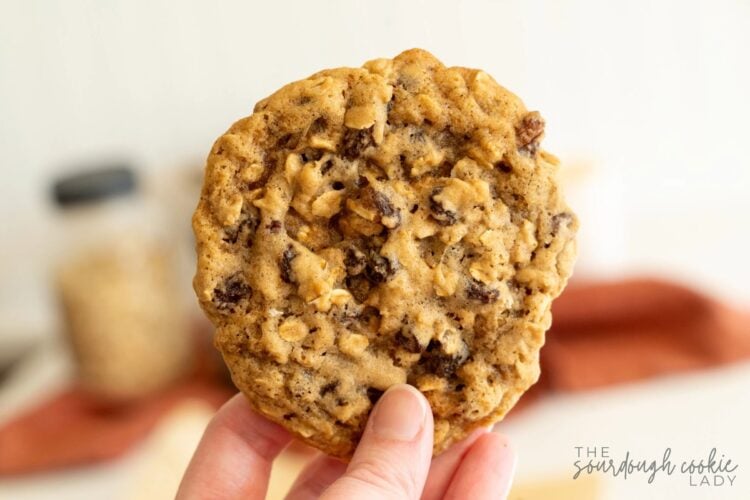
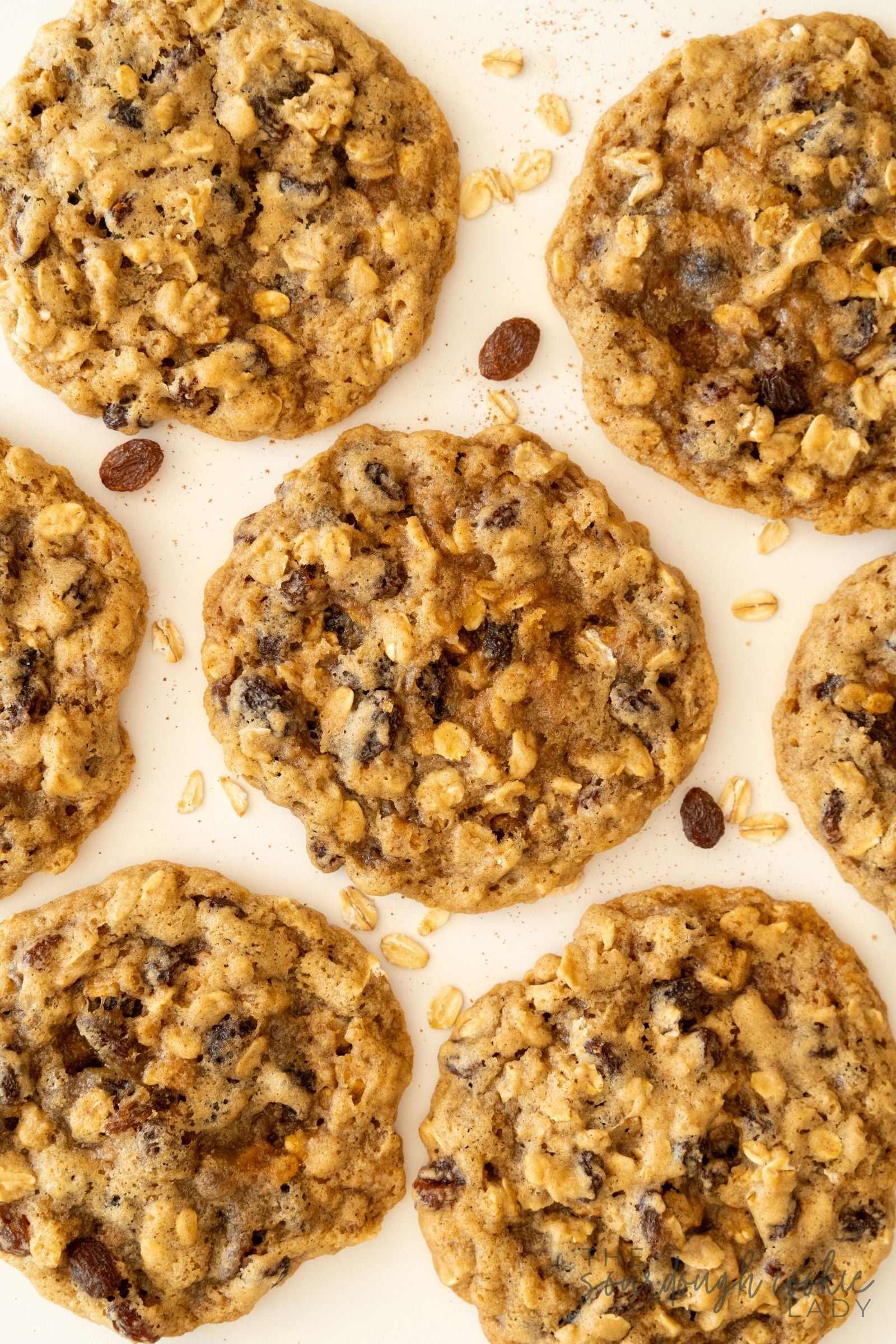
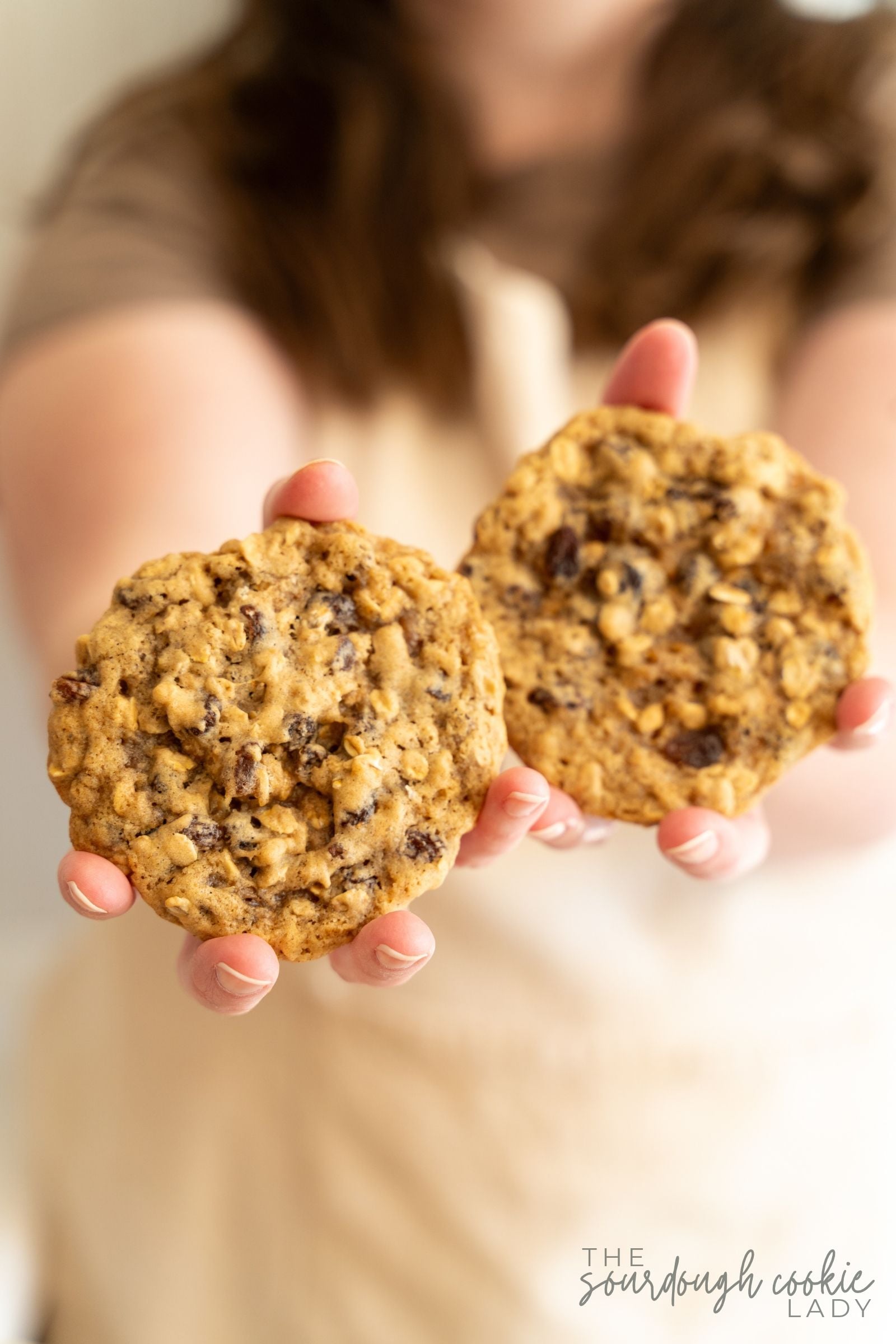
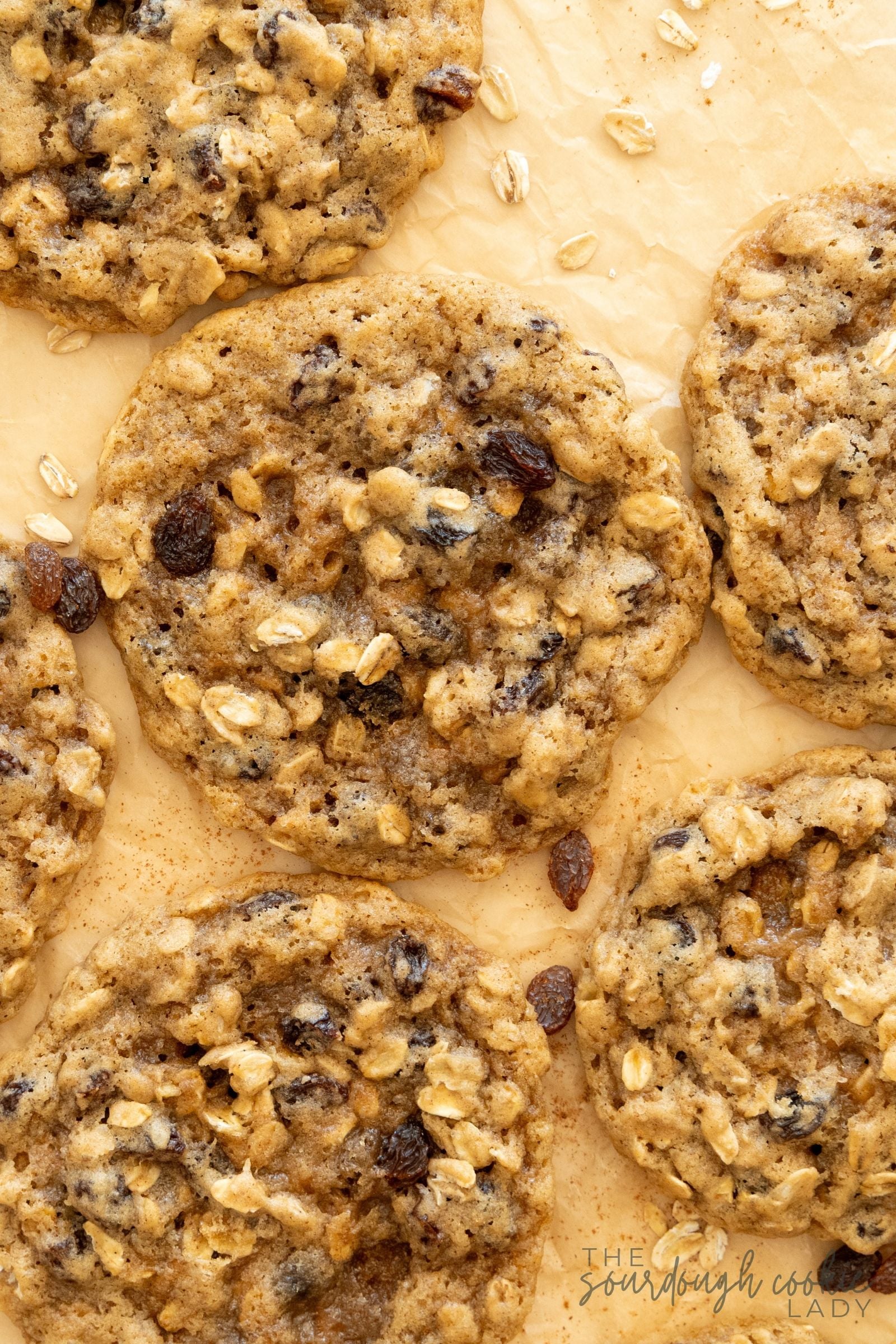
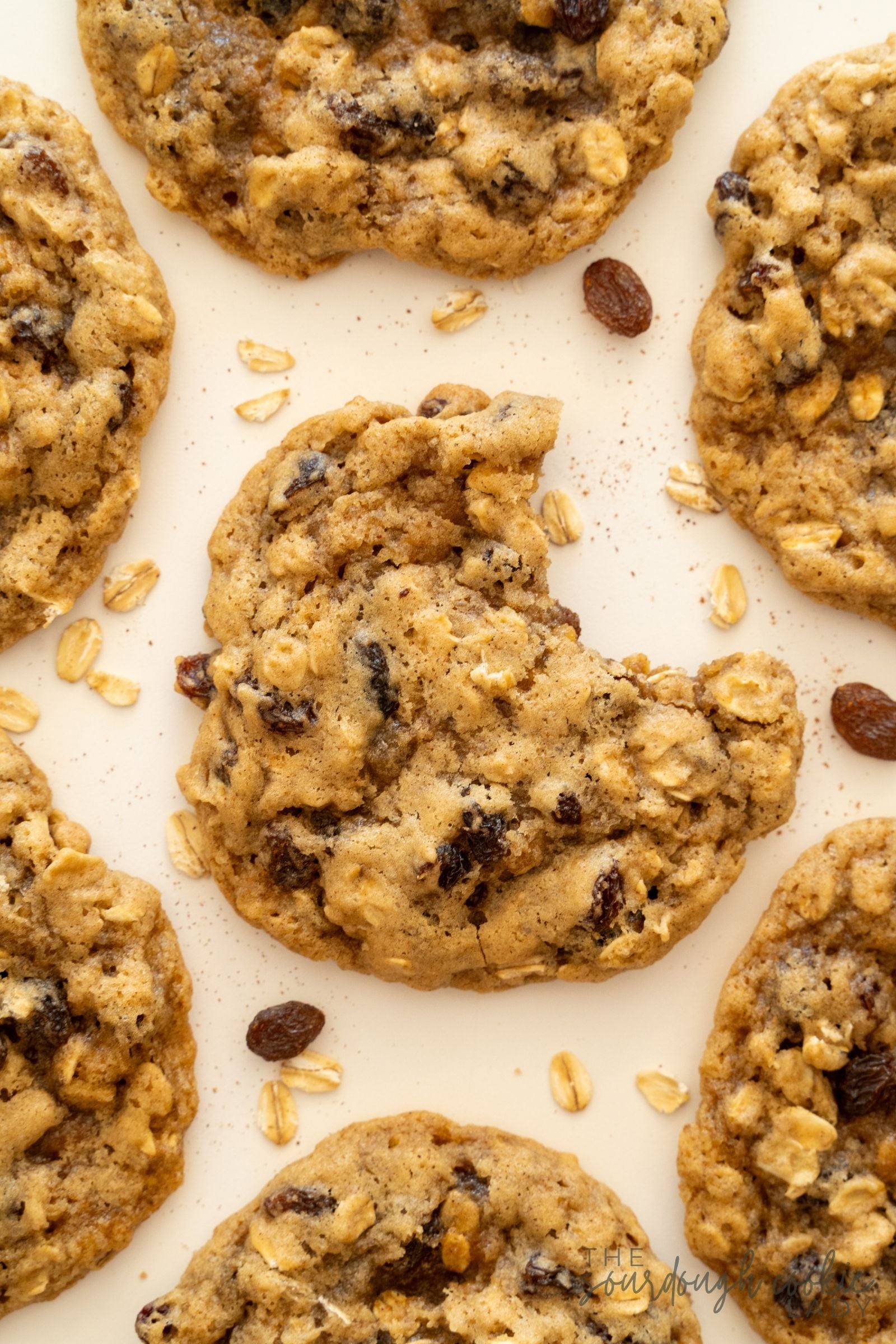
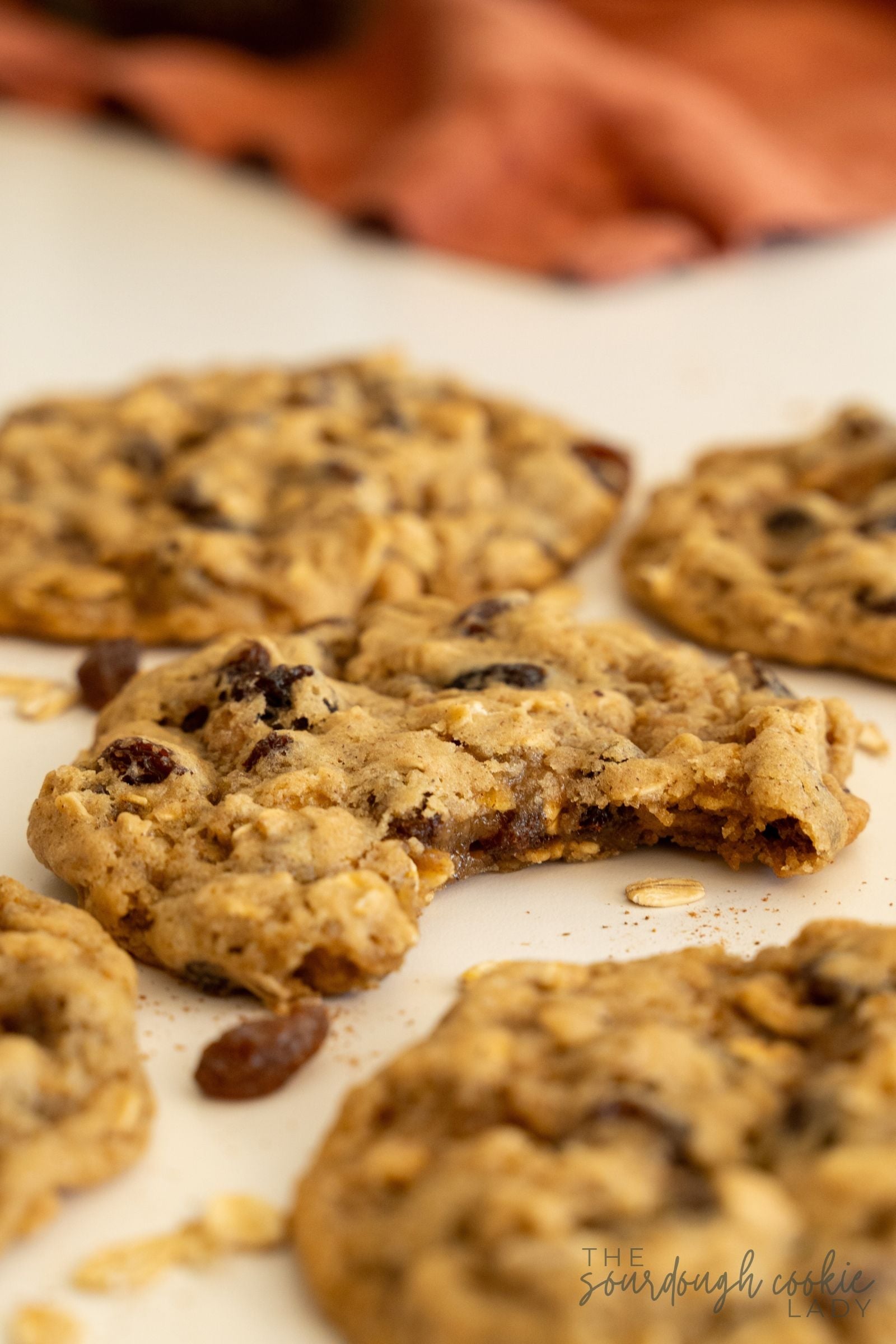
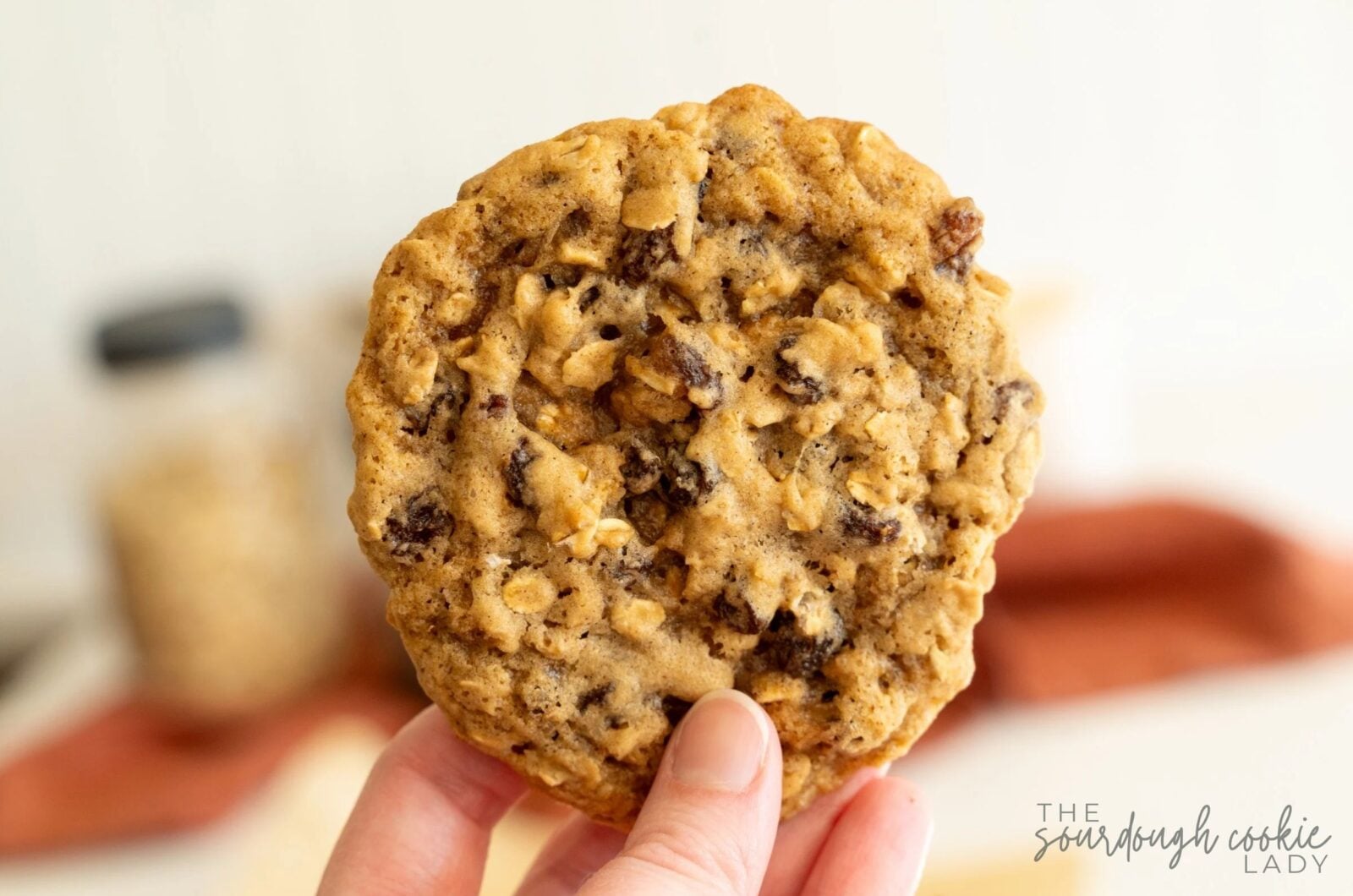
You asked, and I baked! These sourdough oatmeal raisin cookies are chewy from edge to edge, loaded with hearty old-fashioned oats, pockets of plump raisins, and the cozy warmth of cinnamon and cloves. They bake up big, thick, and substantial with those gorgeous crater-like tops, and there’s no chilling and no waiting. It’s a quick, classic, same-day cookie that just might turn you into an oatmeal raisin fan (trust me, it worked on me!).
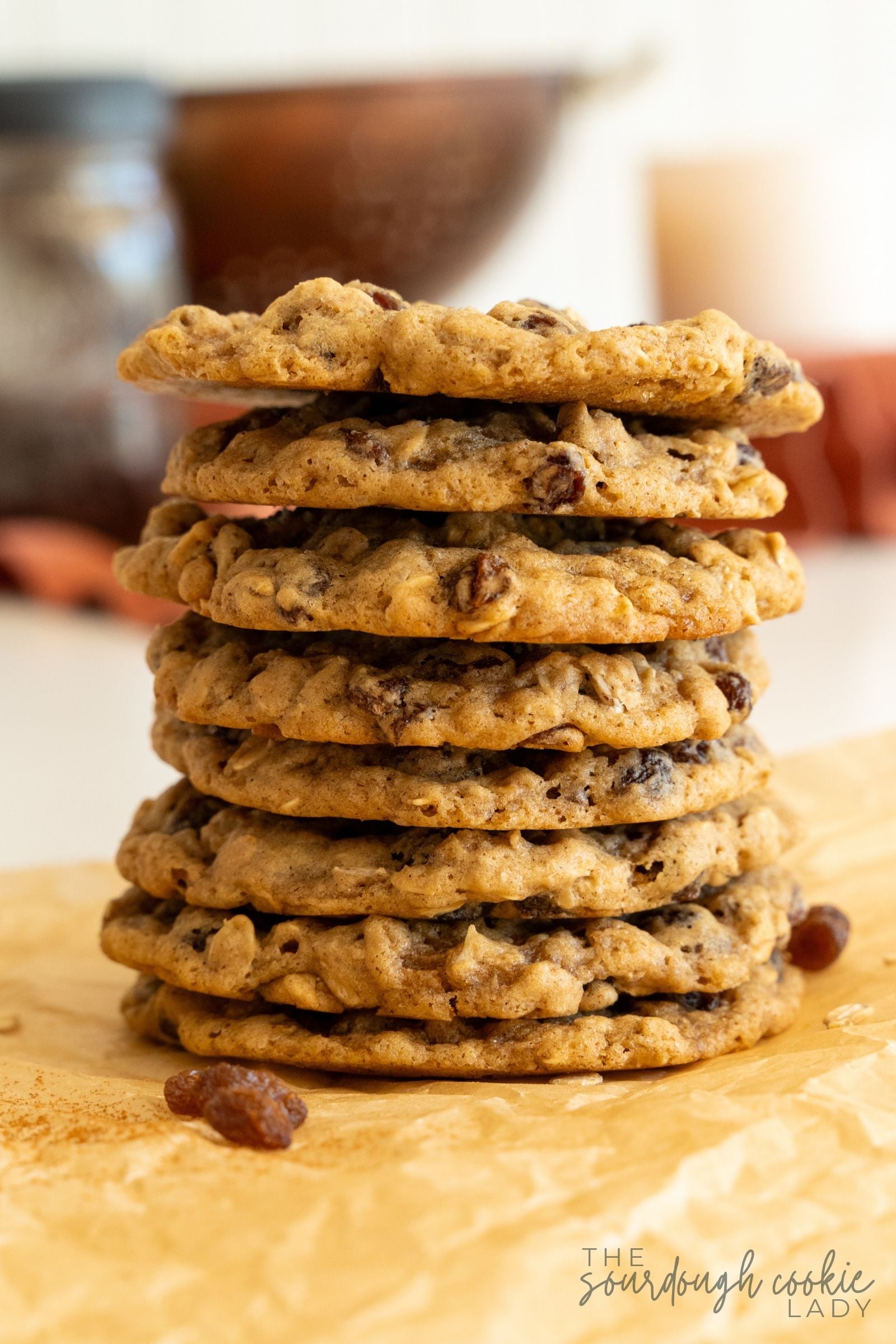
The Story Behind These Oatmeal Raisin Cookies
This recipe started with a sweet message from a reader. They told me my sourdough chocolate chip cookies are their family’s favorite and asked if I would make an oatmeal raisin cookie next. I was already planning to share one, but I worked hard to perfect my recipe in time for holiday baking!
Now for a confession: I was never an oatmeal raisin fan. My husband loves them, but any time I spotted an oatmeal cookie, I got excited thinking it was oatmeal chocolate chip…only to bite into a raisin. Disappointment every time! So I set out to make an oatmeal raisin cookie that even I would love. The warm spices and that incredible chewy texture completely won me over, and now I actually look forward to eating these!
Testing taught me two big lessons. First, skip soaking the raisins. So many recipes recommend it, so I tried it first. It didn’t help anything, and it pulled the flavor right out of the raisins! Second, old-fashioned rolled oats are a must for that hearty, chewy bite. More on both below!
Essentials for the Perfect Sourdough Oatmeal Raisin Cookies
- Digital Kitchen Scale: Thick, chewy cookies depend on the right balance of flour, oats, starter, and moisture. A digital kitchen scale removes the guesswork so your cookies spread properly while keeping those soft, chewy centers. I have used this exact scale in my kitchen for years, and it has never let me down!
- Stand Mixer: Properly mixing the butter and sugars creates the foundation for that dense, bakery-style texture. A quality stand mixer fitted with the paddle attachment makes quick work of this thick, hearty dough, but a handheld electric mixer works too. Just be careful not to overmix once the flour is added!
- Large Cookie Scoop: In order to get big, bakery-style sourdough cookies, you need to use larger-than-average scoops of dough. Using a large cookie scoop makes this easy and gives you the perfect size with even baking every time!
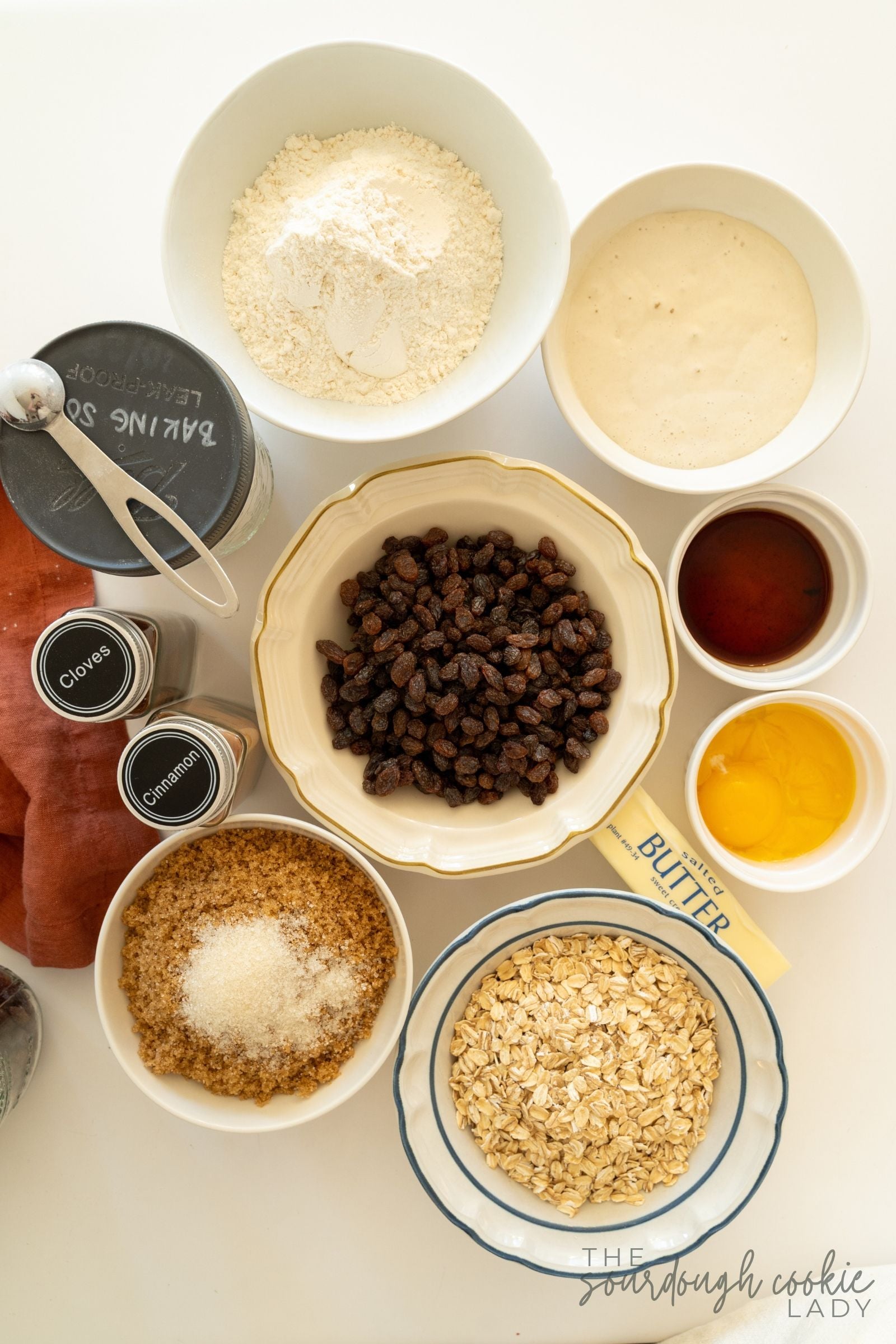
Ingredients
- 1¼ cups light brown sugar, packed (275g): Brown sugar brings the deep caramel flavor and that signature edge-to-edge chew. Pack it tight!
- 1 tbsp granulated sugar (13g): Just a touch helps the cookies spread enough for those beautiful crater-like tops.
- ½ cup salted butter (1 stick / 113g), dent soft: The butter should dent easily when pressed but still feel cool and offer some resistance. It should not be room temperature, shiny, or oily. This keeps the cookies thick and chewy instead of flat. Let cold butter sit out for 30–60 minutes, or if you forgot to soften it, microwave at 50% power for 5–7 seconds per side (two sides total). To use unsalted butter, add ¼ tsp additional salt.
- ½ cup sourdough starter, active or discard, stirred down (150g): In this recipe, the sourdough works behind the scenes for texture even more than flavor. I use cold starter straight from the fridge, which keeps the dough cool enough to bake without chilling. Stir it down well before measuring by volume. For best accuracy, measure by weight.
- 2 large egg yolks (40g): Yolks only (no whites) give these cookies a dense, chewy center that is never cakey.
- 2 tsp vanilla extract (10g): Pure vanilla extract provides the cleanest, best flavor.
- 2 tsp ground cinnamon (5g): The heart of that warm, cozy oatmeal cookie flavor! If you love cinnamon as much as I do, my Soft Sourdough Snickerdoodle Cookies are another cozy favorite.
- ⅛ tsp ground cloves: Just a pinch adds a warm depth that makes these taste like the best oatmeal cookies of your life. Cloves are potent, so a little goes a long way! I also love this warming spice in my Soft Sourdough Gingerbread Cookies.
- ¾ tsp salt (4.5g): Sea salt is preferred over iodized salt for a cleaner flavor profile.
- 1¼ cups all-purpose flour, scooped (not spooned or sifted) (198g): I designed this volume measurement to be scooped directly out of the bag (not sifted or spooned and leveled). Pro Tip: For the best accuracy and overall cookie texture, measure flour by weight.
- 1 tsp baking soda (6g): Ensure you are using baking soda, not baking powder. They’re not interchangeable here.
- 1¼ cups old-fashioned rolled oats (125g): I tested both the cup and gram measurements with Quaker old-fashioned rolled oats. Rolled oats give these cookies their hearty, chewy texture. I don’t recommend quick oats for cookies, since the texture just doesn’t compare (and I haven’t tested them in this specific recipe). Pro Tip: If you use thicker, denser oats, like rolled oats from a farm, measure by weight instead of volume.
- 1½ cups raisins (225g), not soaked: Skip the soaking! It pulls the flavor right out of the raisins. Instead, use soft, plump raisins from a freshly opened package. For the plumpest raisins, choose ones that come in a bag like these rather than a box. I like the Thompson seedless raisins from Trader Joe’s, and I store any leftovers in an airtight mason jar so they stay just as plump for the next batch. Any extras also make a great topping for my Sourdough Carrot Cake Cookies!
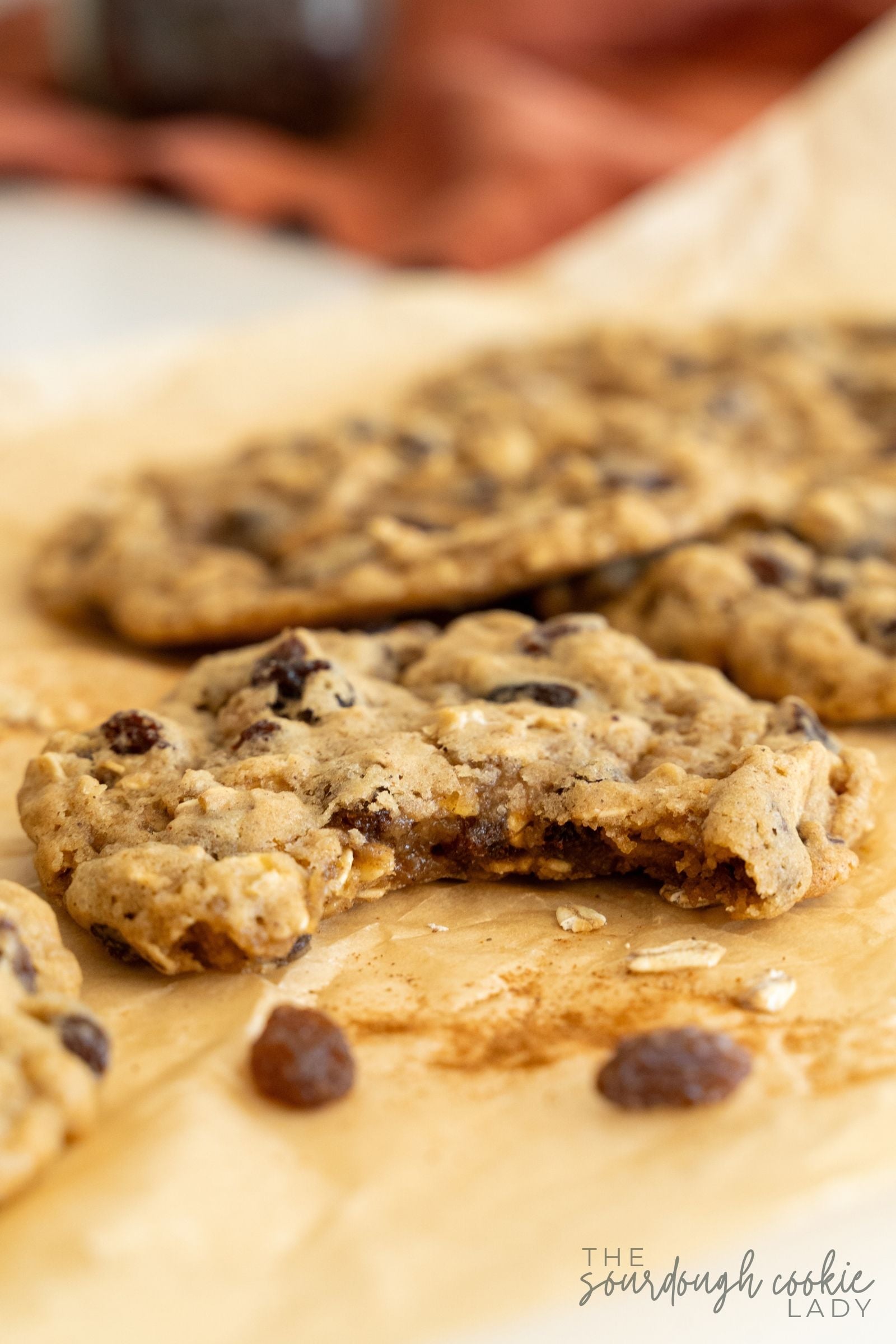
How to Make Sourdough Oatmeal Raisin Cookies
Step 1: Preheat Oven & Prep
Preheat oven to 350°F (175°C). Line a baking sheet with parchment paper.
Step 2: Cream the Butter & Sugars
Beat the brown sugar, granulated sugar, and dent soft butter until the texture is creamy, uniform, and slightly aerated, about 2 minutes. If you see chunks of butter, keep mixing! This works best with a stand mixer (paddle attachment) or a handheld electric mixer.
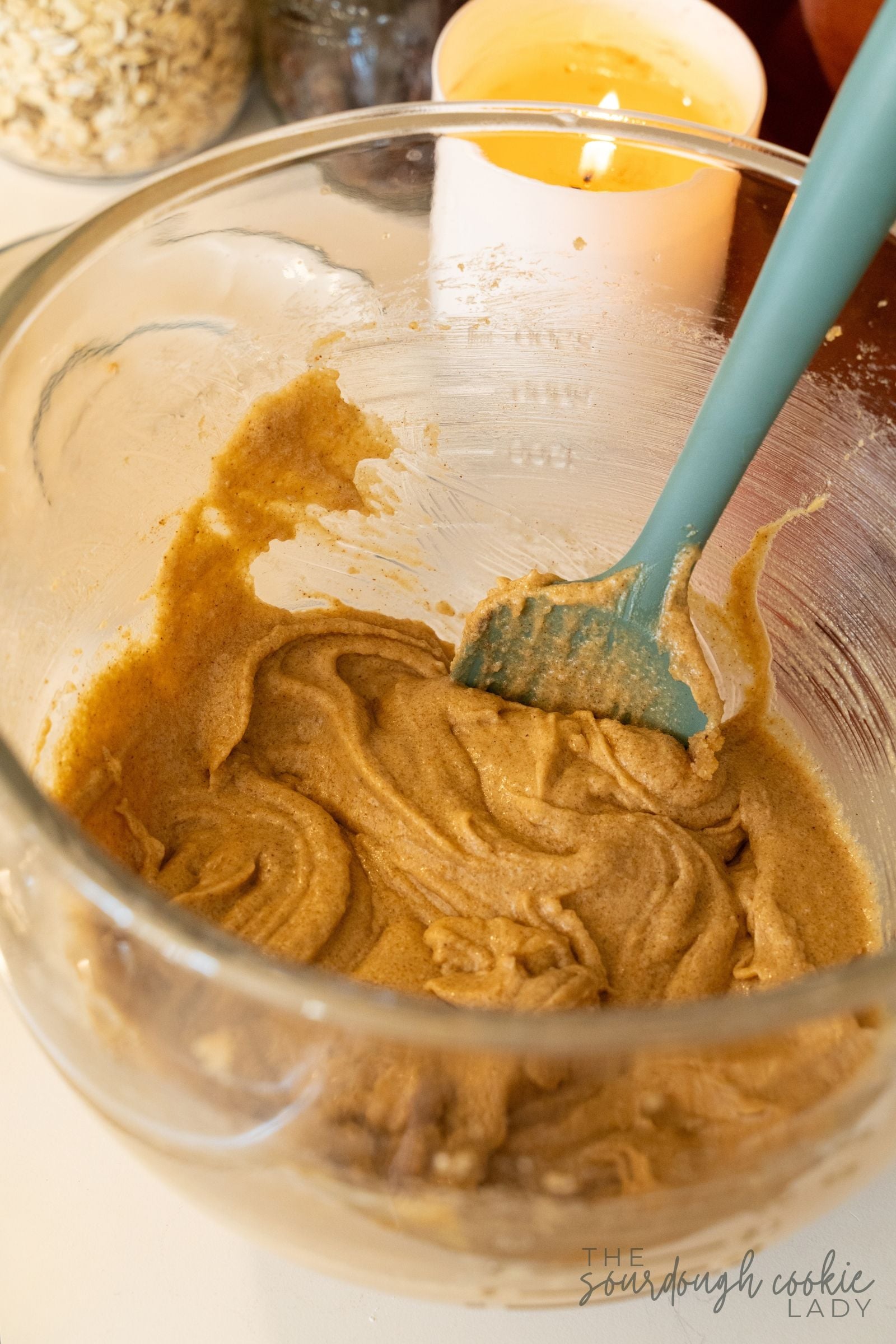
Step 3: Add the Wet Ingredients
Add the sourdough starter, egg yolks, vanilla extract, cinnamon, cloves, and salt. Beat until smooth and slightly frothy. Pro Tip: Scrape down the sides of the bowl to ensure the starter is fully incorporated with no streaks remaining.
Step 4: Incorporate the Dry Ingredients
Add the flour and sprinkle the baking soda evenly over the top. Turn the mixer to low speed and stir until just combined. Critical Step: Stop mixing when you still see a few tiny streaks of flour remaining. Overmixing here develops too much gluten, making cookies tough rather than chewy.
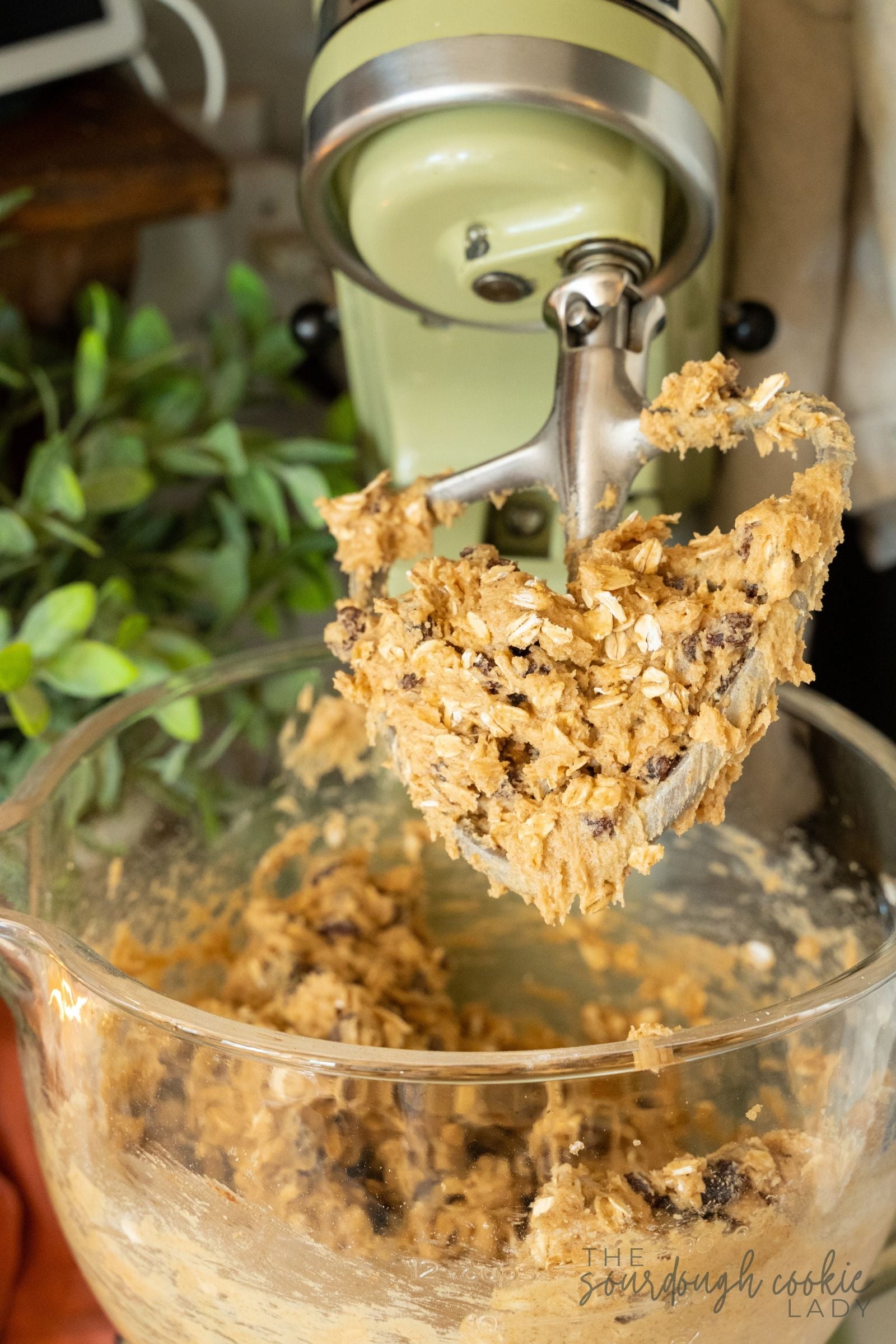
Step 5: Fold in the Oats & Raisins
Add the oats and raisins and mix on the lowest speed (or fold by hand) until they are evenly distributed throughout the dough. Do not overmix.
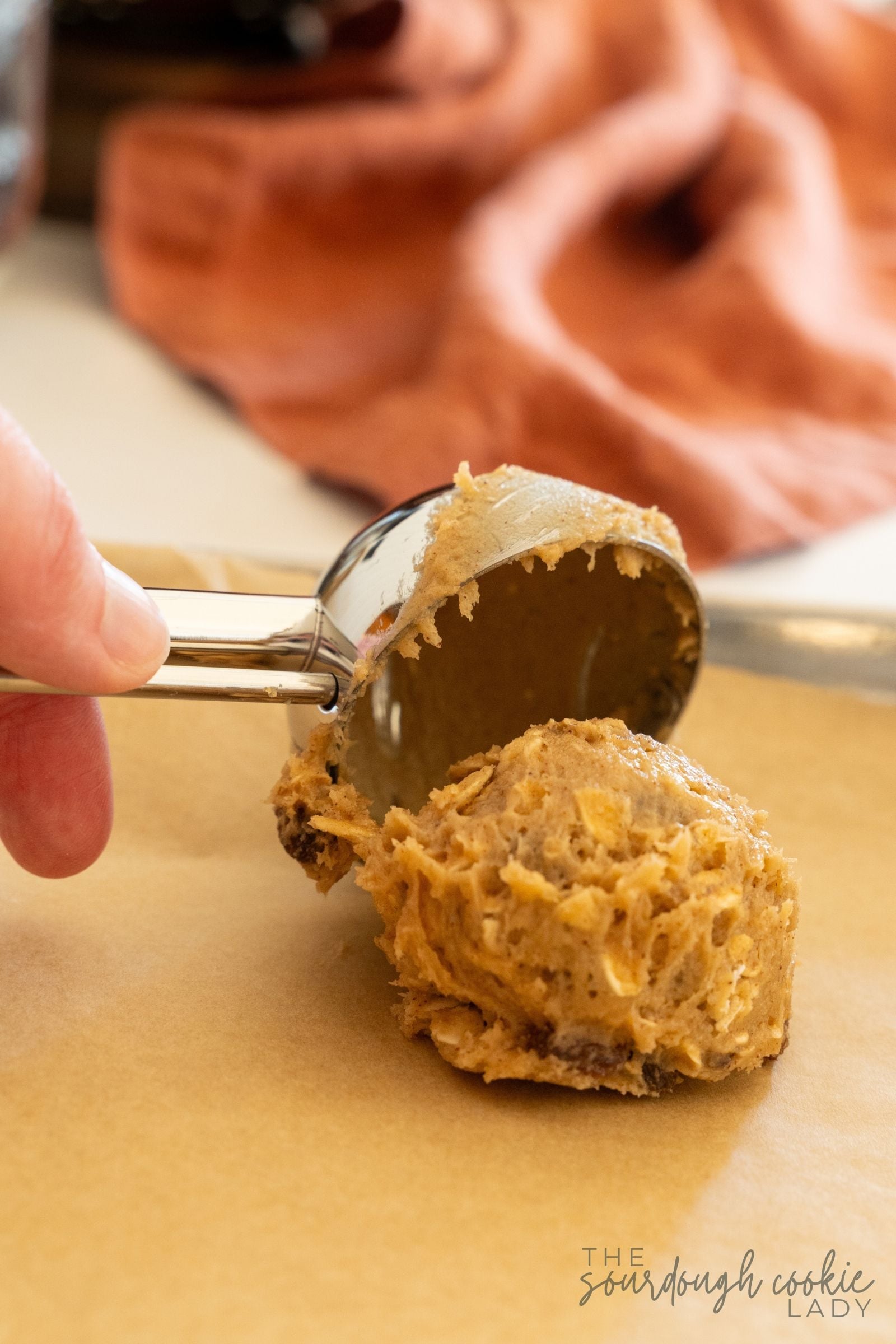
Step 6: Scoop
Portion the dough into large scoops using a cookie scoop or spoon (3 tbsp / about 65g each). Place 6 scoops per baking sheet to allow space for spreading.
Pro Tip: You can squeeze 8 on a sheet in a 3-2-3 pattern, but they will likely run into each other. If you do, separate them right out of the oven by cutting between them with a spatula.
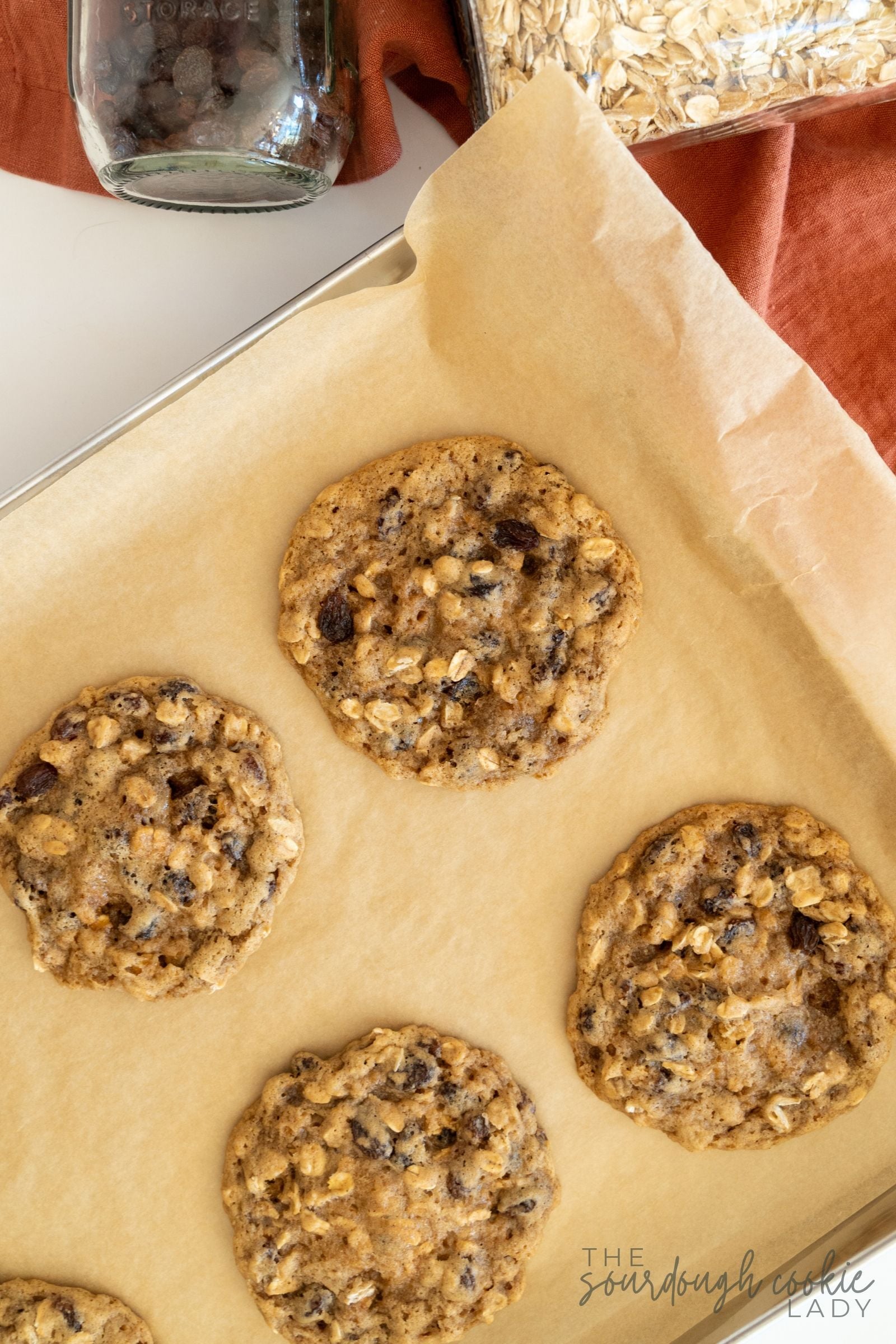
Step 7: Bake
Bake for 13–15 minutes, rotating the pan halfway through. Remove when the edges are set and slightly golden but the centers are still soft. Don’t overbake! Pulling them while the centers are soft is the secret to cookies that stay chewy for days. Pro Tip: Immediately after removing the pan from the oven, firmly tap it against a heatproof surface a few times to deflate the cookies. This creates a denser, chewier texture. Bake in batches of 6. Recipe makes about 18 cookies.
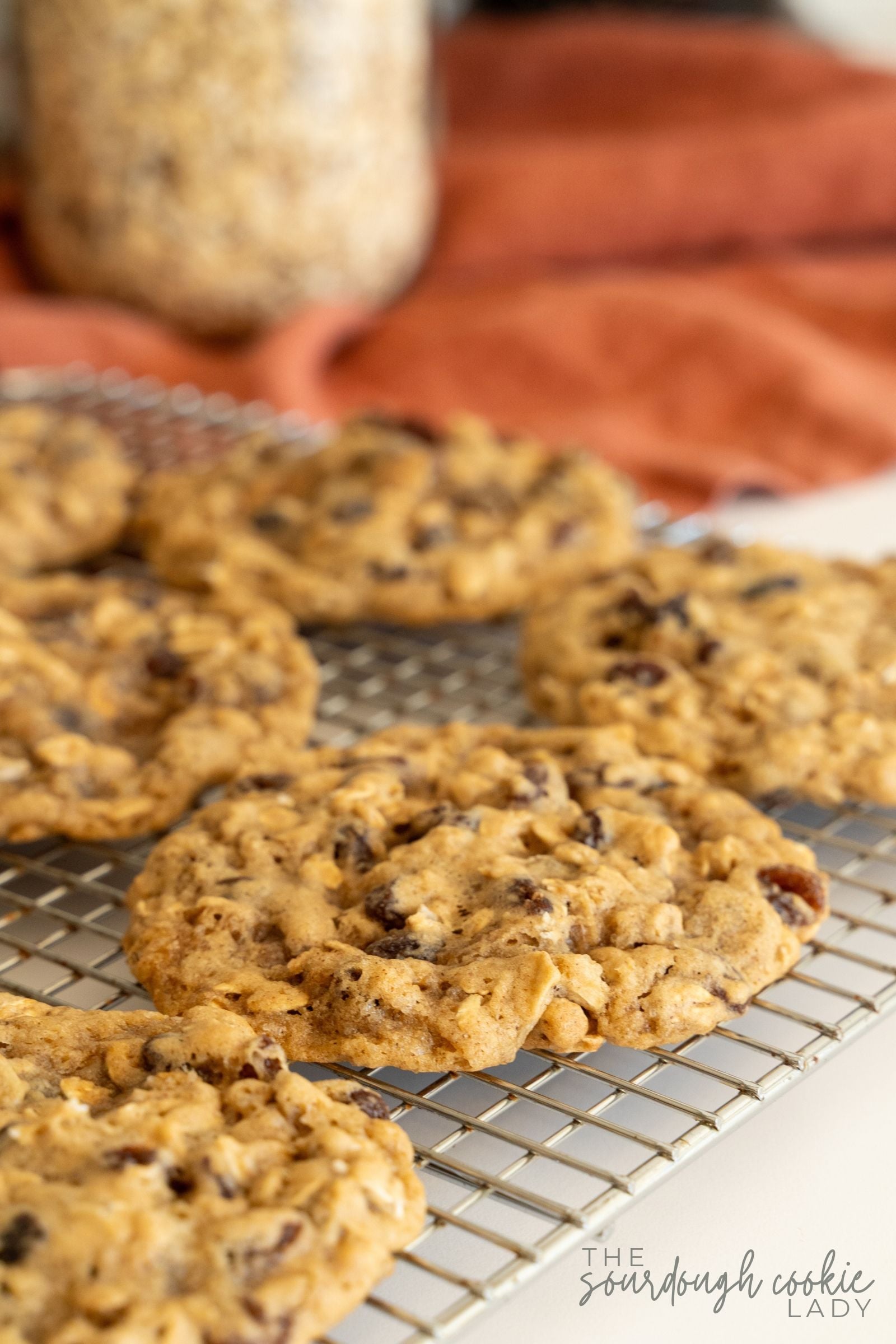
Step 8: Cool on Baking Sheet
Allow cookies to set on the hot baking sheet for 8 minutes before transferring to a wire rack. These cookies are so chewy that they need to cool for a little extra time after baking, which makes them easier to move.
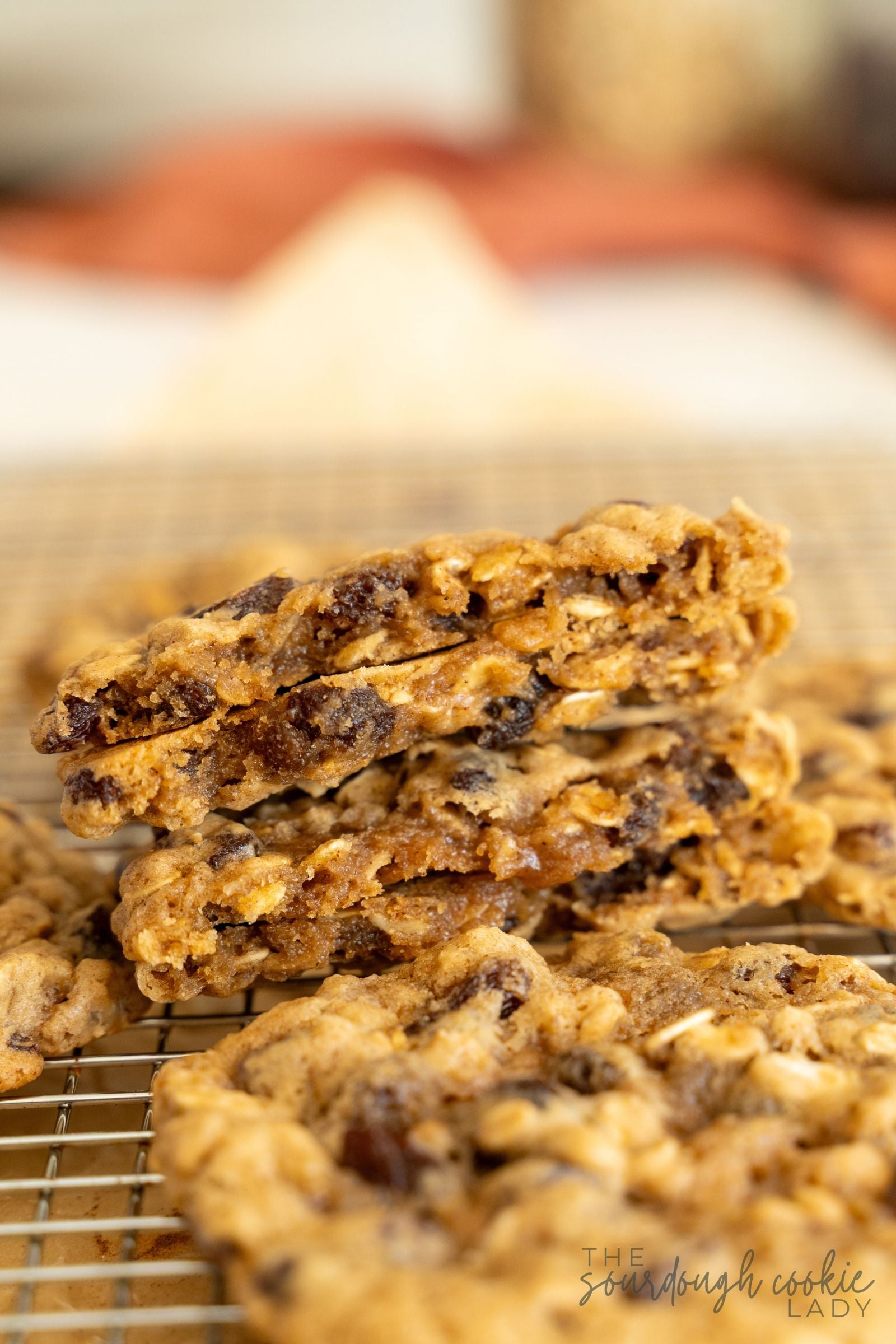
Storage Tips
- Store completely cooled cookies in an airtight container for up to 5 days at room temperature. Stored airtight, they keep that soft, chewy texture for days!
- Pro Tip: As an optional step for extra-soft cookies all week, place a slice of bread in the container. The cookies will absorb the moisture from the bread (the bread will turn hard!), keeping them soft and chewy as the days go on.
Why This Recipe Works
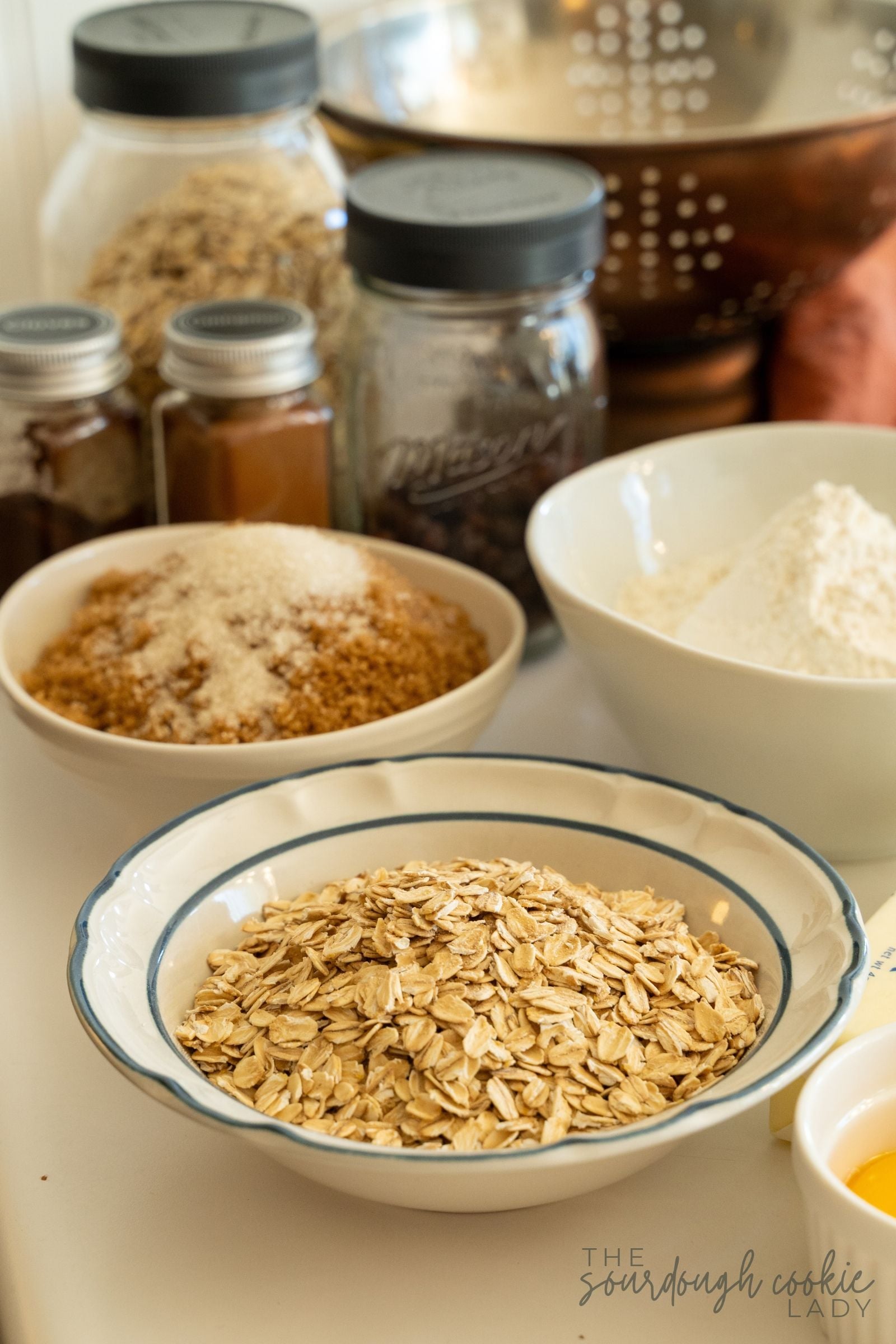
- Old-fashioned rolled oats. Hearty rolled oats give every bite that substantial, chewy texture that makes these oatmeal cookies so satisfying.
- Sourdough for texture. The sourdough starter works quietly in the background, adding to that soft, chewy texture without tasting sour.
- Plump, unsoaked raisins. Because the raisins are never soaked, they stay plump and full of flavor, tucked into every bite as soft, sweet pockets.
- A cozy spice blend. Warm cinnamon and cloves make these taste like the oatmeal cookies you remember, only better!
- Packed brown sugar and egg yolks only. Brown sugar holds onto moisture for that deep caramel chew, and skipping the egg whites keeps the cookies dense and chewy from edge to edge, never cakey.
- No chill, same day. Mix, scoop, and bake, and you’ll have thick, chewy oatmeal raisin cookies in under an hour!
The Sourdough Cookie Lady Tips
- Skip soaking the raisins. Soaking pulls the flavor right out of them. Raisins from a freshly opened bag are already plump and soft, and they bake into sweet, juicy pockets.
- Use old-fashioned rolled oats. Rolled oats give these cookies their hearty, chewy bite. Quick oats break down too much and won’t give you the same texture.
- Let the butter become “dent soft.” To keep this a no-chill recipe, the butter should indent easily when pressed but still feel cool and offer some resistance. It should not look melted, shiny, or oily.
- Do not overbake the cookies. Remove them when the edges are set but the centers still look soft and slightly underbaked. They will continue to firm up on the hot baking sheet, giving you that dense, chewy center instead of a dry or cakey texture.
- Use only the egg yolks. Whole eggs add too much moisture and can push the cookies toward a cakey texture. Egg yolks help keep the centers dense, soft, and chewy.
- Measure the flour, oats, and sourdough starter by weight if possible. The balance between the dry ingredients and the moisture from the sourdough starter makes a big difference in the final texture. Weighing them helps prevent cookies that spread too much or turn out overly thick and dry.
- Tap the pan after baking. Tapping the pan right after baking helps deflate the centers slightly for a denser, chewier bite.
Frequently Asked Questions
What texture do the raisins have in these cookies?
The raisins bake into soft, plump pockets in the middle of a chewy cookie, and it’s the best combination. Even as a former oatmeal raisin skeptic, I can’t get enough of them!
Will these oatmeal cookies be dry?
Not if you pull them out of the oven on time! Remove them while the centers are still soft. Also, be sure that you are measuring the flour and oats carefully (ideally by weight), as adding too much of either may cause some dryness. They will finish setting on the hot baking sheet and stay soft and chewy for days when stored in an airtight container.
Why did my cookies come out cakey instead of chewy?
Cakey cookies are commonly caused by adding too much flour or using whole eggs instead of egg yolks. For that signature dense, chewy texture, weigh the flour in grams, use only the yolks, and remove the cookies from the oven when the edges are set but the centers are still soft. Overbaking can make the cookies dry, while overmixing after adding the flour can create a tough, bread-like crumb. Mix on low speed only until a few tiny streaks of flour remain, then gently finish incorporating them as you fold in the oats and raisins.
Should I soak the raisins first?
No! I tested soaking the raisins, and it didn’t help anything. In fact, it actually pulled the flavor out of them and left them dull. For the best results, use raisins from a freshly opened bag. They’re already plump, soft, and full of flavor.
Can I use quick oats instead of rolled oats?
I don’t recommend it. I used quick oats in my early cookie baking, and the texture doesn’t compare to old-fashioned rolled oats. I haven’t tested quick oats in this exact recipe, so I can’t promise how they’ll turn out.
Will these cookies taste sour?
No! In this recipe, the sourdough starter benefits the texture more than the flavor. To make sure the cookies do not taste sour, use starter or discard that has been fed within the last two weeks. The warm cinnamon and cloves also do a wonderful job of balancing any tang.
Does this dough need to chill?
No, it doesn’t! This is a quick, classic, no-chill recipe. Mix, scoop, and bake right away for thick, chewy cookies. If you’d like deeper sourdough flavor, you can refrigerate the dough scoops for up to 48 hours. See the long-fermentation directions below for the full method.
Can I use active starter instead of discard?
Absolutely! Both active starter and sourdough discard work perfectly here. The baking soda handles most of the leavening, so you can use active or discard interchangeably. Just be sure to stir active starter down if measuring by volume.
Can I freeze sourdough oatmeal raisin cookie dough?
Absolutely! For best results, follow this flash-freezing method:
- Scoop: Portion the dough into balls (3 tbsp / about 65g each) and place them on a parchment-lined baking sheet. They can be close together, but make sure they are not touching.
- Flash Freeze: Place the sheet in the freezer for about 1 hour, or until the dough balls are firm to the touch.
- Store: Transfer the frozen dough balls into a gallon freezer bag. They can be stored in the freezer for up to 3 months!
Pro Tip: Make a double batch and freeze half! You’ll have warm, chewy oatmeal raisin cookies ready for lunchboxes, after-school snacks, or a cozy evening treat, with no mixing bowls to wash next time.
Tips for Baking Frozen Dough:
Thaw Partially: For best results, allow frozen dough to sit at room temperature for 30–60 minutes before baking. This helps achieve a texture and baking time nearly identical to a fresh batch of dough.
Potentially Increase Bake Time: You may need to add 1–2 minutes to the baking time if the dough is still colder than fresh dough would be. Dough that is still cold may also spread a little less.
How to Make Long-Fermented Sourdough Oatmeal Raisin Cookies
For deeper sourdough flavor and a slower fermentation that some bakers prefer, follow these simple directions:
- Prepare & Portion: Make the dough as directed, then portion it into large scoops (3 tbsp / about 65g each).
- Cold Ferment: Place the scoops in an airtight container, or cover them tightly on a baking sheet. Refrigerate for up to 48 hours. The longer the dough ferments, the tangier it may taste.
- Soften the Dough: Let the portions sit at room temperature for about 15–30 minutes, until they feel cool but not cold and a gentle press leaves a slight dent. Warmer kitchens will be on the shorter end.
- Bake: Place 6 portions on a lined baking sheet and bake according to the recipe directions!
What to Expect: The oats keep absorbing moisture while the dough rests in the fridge, so long-fermented cookies may spread a little less and bake up slightly thicker.

Sourdough Oatmeal Raisin Cookie Recipe:
Big Sourdough Oatmeal Raisin Cookies (No-Chill & So Chewy!)
These sourdough oatmeal raisin cookies are big, thick, and chewy from edge to edge! Loaded with hearty old-fashioned oats, plump raisins, and warm cinnamon spice, this no-chill dough bakes up same-day and uses your sourdough discard or active starter!
18
10
minutesmin15
minutesmin235
kcalKeeps your screen on while viewing recipe
Recommended Equipment
- For Best Accuracy:Digital Kitchen Scale
- For Easy Mixing:Stand Mixer
- For Uniform Cookies:Large Cookie Scoop
Ingredients
1¼ cups light brown sugar packed (275g)
1 tbsp granulated sugar (13g)
½ cup (1 stick) salted butter softened, see softness notes (113g)
½ cup sourdough starter active or discard, stirred down (150g) I use cold starter to help keep dough temperature cool
2 large egg yolks (40g)
2 tsp vanilla extract (10g)
2 tsp ground cinnamon (5g)
⅛ tsp ground cloves
¾ tsp salt (4.5g)
1¼ cups all-purpose flour scooped directly from the bag and leveled off (not spooned and leveled) (198g)
1 tsp baking soda (6g)
1¼ cups old-fashioned rolled oats (125g)
1½ cups raisins (225g)
Directions
- Preheat & Prep: Preheat oven to 350°F (175°C). Line a baking sheet with parchment paper.
- Cream Butter & Sugars: In a large bowl or stand mixer fitted with a paddle attachment, beat brown sugar, granulated sugar, and softened butter until well combined and aerated, about 2 minutes.
- Add Wet: Beat in sourdough starter, egg yolks, vanilla extract, cinnamon, cloves, and salt until smooth and slightly frothy, scraping the sides of the bowl as needed.
- Incorporate Dry: Add all-purpose flour, then sprinkle the baking soda evenly over the top. Stir on the lowest speed until just incorporated. Do not overmix.
- Fold in Oats & Raisins: Gently fold in oats and raisins until evenly distributed, again being careful not to overmix.
- Scoop: Portion the dough using a large cookie scoop or spoon (3 tbsp / about 65g each). Place 6 scoops onto the prepared baking sheet, spacing them evenly.
- Bake: Bake for 13–15 minutes, rotating the pan halfway through. The edges should be set and slightly golden, but the centers should look soft and slightly underbaked. Do not overbake. Immediately tap the pan firmly a few times to deflate the cookies. Cookies will firm up as they cool. Bake in batches of 6 until all cookies are done. Recipe makes about 18 total cookies.
- Cool on Baking Sheet: Allow to cool on the baking sheet for 8 minutes before transferring to a wire rack.
Recipe Notes
- • Secret to Chewy Oatmeal Cookies: Packed brown sugar, egg yolks only, and old-fashioned rolled oats make these cookies chewy from edge to edge. Pull them from the oven while the centers are still soft.
• Oats: Use old-fashioned rolled oats (tested with Quaker). Quick oats are not recommended. If using thicker, denser oats, measure by weight.
• Raisins: Use soft, plump raisins from a freshly opened package. Do not soak them.
• “Dent Soft” Butter: Temperature is key. The butter has reached dent-soft consistency when it indents easily when pressed but is still cool and offers resistance. It should not be room temperature, oily, greasy, or shiny. Allow cold butter to sit out for 30–60 mins, or microwave at 50% power for 5–7 seconds per side (two sides total), checking for that consistency. If using unsalted butter, add an extra ¼ tsp salt to the dough.
• Flour: For best accuracy, weigh the flour. Volume measurements are designed for flour scooped directly from the bag, no sifting or spooning needed.
• Sourdough Starter: Active starter or discard works. I use cold discard straight from the fridge, which keeps the dough cool enough to bake without chilling.
• Store & Freeze: Keep cooled cookies in an airtight container at room temp for up to 5 days. Pro Tip: Add a slice of bread to the container to keep them soft for longer. Freeze dough scoops for up to 3 months. Thaw 30–60 minutes, then bake as directed.
• Long Fermentation: Refrigerate covered dough scoops for up to 48 hours. Let them sit 15–30 minutes, until cool but not cold, then bake as directed. Long-fermented dough may spread a little less.
• More Classic Cookies: Love these? Try my Sourdough Chocolate Chip Cookies, Soft Sourdough Snickerdoodle Cookies, and Sourdough Peanut Butter Cookies!
Approximate Nutrition Information
- Servings: 18
- Calories: 235kcal
- Fat: 6g
- Saturated Fat: 3.5g
- Cholesterol: 38mg
- Sodium: 230mg
- Carbohydrates: 42g
- Fiber: 2g
- Sugar: 23g
- Protein: 3g
from my baking sheet to yours,